


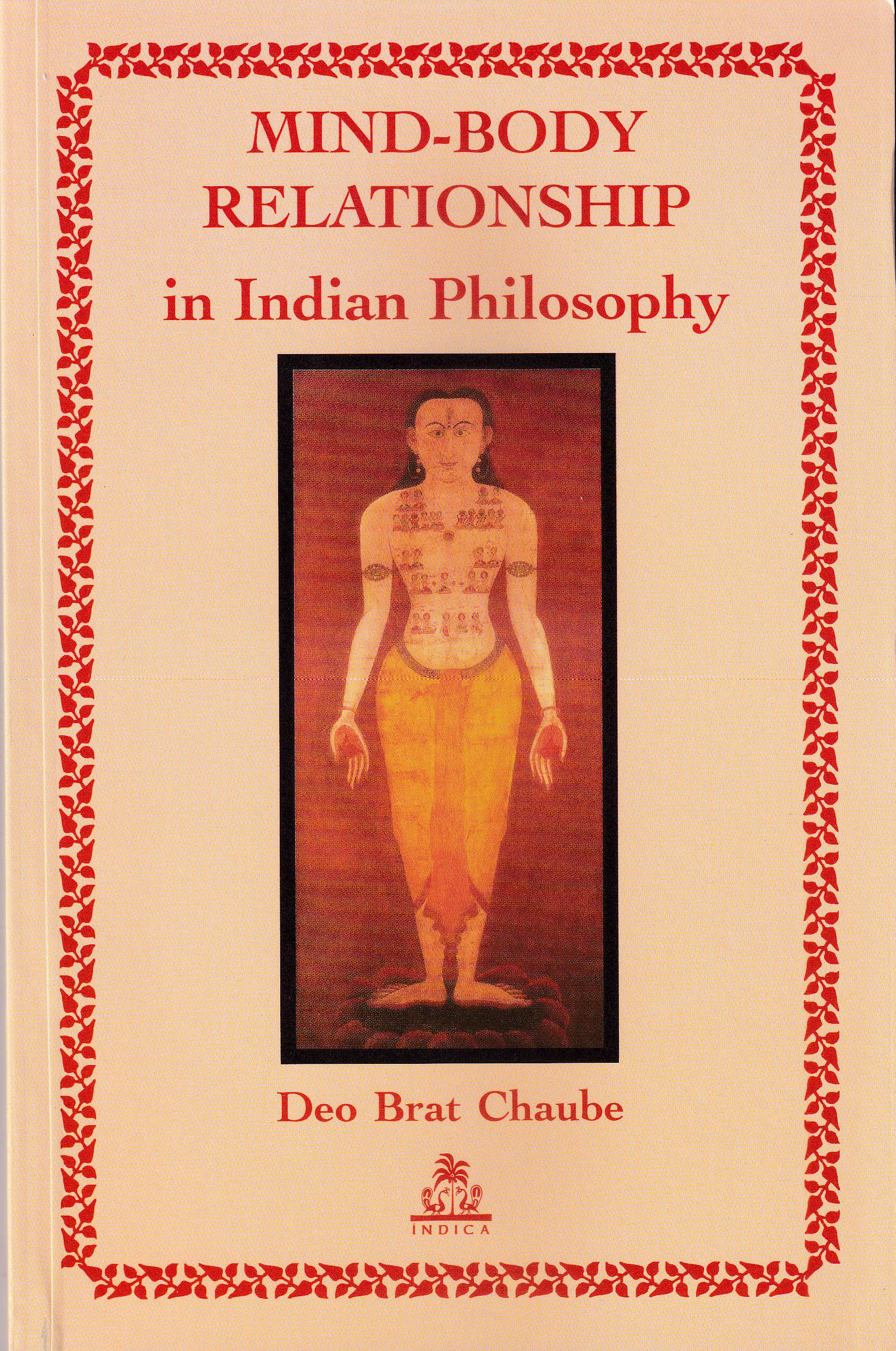
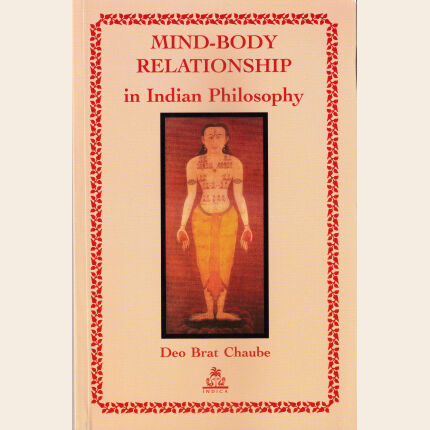
Mind Body Relationship in Indian Philosophy
₹525
| Author, Editor or Translator | Deo Brat Chaube |
|---|---|
| Bound | PB |
| Country of origin | India |
| Number of Pages | 172 |
| Publisher | INDICA BOOKS |
| Weight and Dimension | 350gm. 21.5×14.5×1 Cm. |
| ISBN | 9789381120507 |
In stock
Description
This book is an attempt to understand the ‘mind-body relationship’ from the standpoint of Indian philosophy. The author exposes the topic as dealt with in traditional Indian schools of philosophy, in particular by Samkhya-Yoga schools and also by Ayurveda. He also presents the Nyaya-Vaisesika and Vedantic perspectives, as well as the Carvaka who, like modern Western materialists, do not believe in the separate existence of the mind from the physical body. The author also presents western studies and tendencies on this subject.
The problem of the relation of mind and body is no special problem in Indian philosophy because Indian thinkers do not equate mind with the self. In Indian philosophy the word ‘mind’ is used in the sense of manas or antahkarana (internal organ) and not in the sense of atman (self). But Western thinkers differentiate mind from body on the one hand and equate mind with the self on the other hand. Some of them have advanced ‘interactionism’, where mental and bodily states interact. But if the stuff of the mind is so different from the stuff of the body, then how do they influence one another? This problem vanishes when we look at the point from the Yoga perspective. Here also there is interactionism between mind and body, but in Yoga philosophy the mind is not different from the body. Mind and body come under the same category, as mind is subtle matter–both are transformations or prakrti. Ayurveda also believes in the reciprocal effect of mind on body and vice-versa, thereby proving the intimate relationship of mind and body.
Only logged in customers who have purchased this product may leave a review.
Related products

Action Freedom and Responsibility
This book, a work on human doing, analyses and applies three central aspects of human life - Action, Freedom and Responsibility - in the wide spectrum of the Philosophy of Mind. Reflections on these issues and their interconnections have a significant effect on the Philosophy of Value and application of ethical theories in practical life.

Ethics and Culture
The present volume of Ethics and Culture contains six articles of renowned teachers of philosophy who are also the members of the value Group, Centre of advanced study in philosophy, Jadavpur University. In all these articles authors have explored the contributions of the great thinkers of the modern India regarding the value system of our country. Here the perspectives of Bankim Chandra Chattopadhyay, Bal Gangadhar Tilak, Dwijendranath Tagore, Tarabai Shinde, J.N. Mohanty and Sri Ramakrishna Paramahamsa have been discussed in detail as all of them have a distinct view and faith on the traditional cultural beliefs of India and also have taken a critical approach to judge the mundane, orthodox attitude of people.

Fundamentals of Indian Philosophy
Indian philosophy reflects some of the earliest thought-traditions in human history. Its foundations can be traced to ancient minds and their capacity for insatiable curiosity and constant meditation. The Indian thinkers of old aimed their pragmatic philosophies at not just the satisfaction of intellectual curiosity or pursuit of theoretical truths but actually the assimilation of intellectually discerned and established truths into one's own personality for a life of freedom and enlightenment. This is true of modern Indian philosophers, like Sri Aurobindo and Dr. Radhakrishnan, as well. Fundamentals of Indian Philosophy reflects the vastness and richness of this philosophic tradition in a comprehensive and all-embracing yet compact presentation that lays bare the essentials of Indian philosophy.


Integrating Interdisciplinarity through Philosophy
The books delves into the idea and the philosophy of interdisciplinarity, and then unravels the genealogy, dynamics, and myriad configurations of the highly complex phenomenon. It goes on to assess impact, advantages and critical issues involved in interdisciplinarity, while outlining an Indian view of it. The book, thus, explores the conceptual connections, fundamental issues and intrinsic implications of a myriad variety of interdisciplinary study and research, within and beyond academia. The book also attempts to develop necessary theoretical perspectives and a broader conceptual framework in this connection.

Reviews
Clear filtersThere are no reviews yet.