


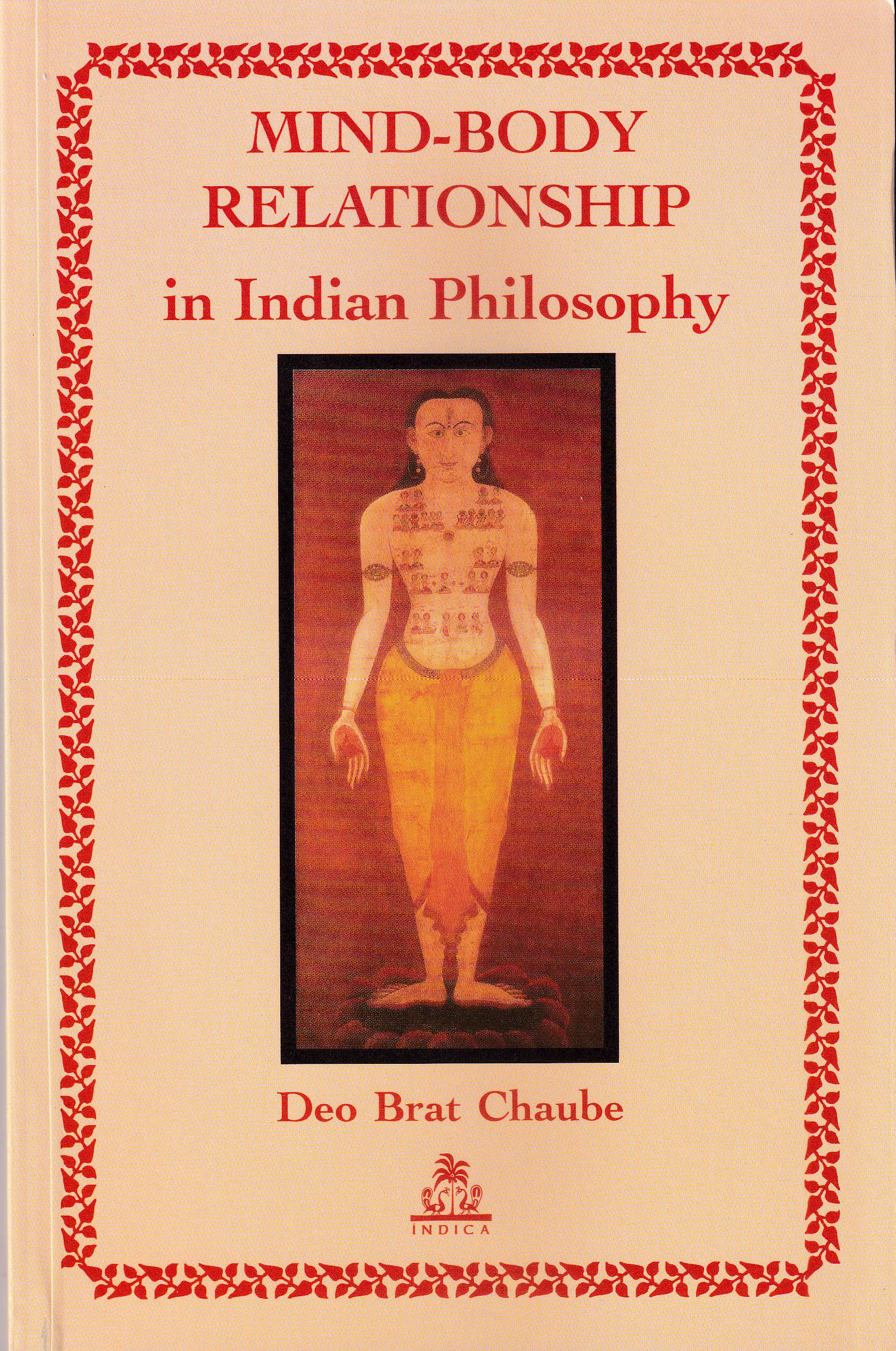
Mind Body Relationship in Indian Philosophy
₹525
| Author, Editor or Translator | Deo Brat Chaube |
|---|---|
| Bound | PB |
| Country of origin | India |
| Number of Pages | 172 |
| Publisher | INDICA BOOKS |
| Weight and Dimension | 350gm. 21.5×14.5×1 Cm. |
| ISBN | 9789381120507 |
In stock
Description
This book is an attempt to understand the ‘mind-body relationship’ from the standpoint of Indian philosophy. The author exposes the topic as dealt with in traditional Indian schools of philosophy, in particular by Samkhya-Yoga schools and also by Ayurveda. He also presents the Nyaya-Vaisesika and Vedantic perspectives, as well as the Carvaka who, like modern Western materialists, do not believe in the separate existence of the mind from the physical body. The author also presents western studies and tendencies on this subject.
The problem of the relation of mind and body is no special problem in Indian philosophy because Indian thinkers do not equate mind with the self. In Indian philosophy the word ‘mind’ is used in the sense of manas or antahkarana (internal organ) and not in the sense of atman (self). But Western thinkers differentiate mind from body on the one hand and equate mind with the self on the other hand. Some of them have advanced ‘interactionism’, where mental and bodily states interact. But if the stuff of the mind is so different from the stuff of the body, then how do they influence one another? This problem vanishes when we look at the point from the Yoga perspective. Here also there is interactionism between mind and body, but in Yoga philosophy the mind is not different from the body. Mind and body come under the same category, as mind is subtle matter–both are transformations or prakrti. Ayurveda also believes in the reciprocal effect of mind on body and vice-versa, thereby proving the intimate relationship of mind and body.
Only logged in customers who have purchased this product may leave a review.
Related products


Advaita Metaphysics
This book undertakes the study of Advaitavada of sankara in its depth and extension. It spells out the relative cogency of Malkani's understanding of Advaita Metaphysics and Methodology, Murty's Critique of Advaita (nondualism) and Misra's Philosophical Construction of Advaita from a linguistic perspective. This volume centres around the formulations of the Advaita theory of monism on the basis epistemological and logical analysis of knowledge in Adhyasa Bhasya.


Fundamentals of Indian Philosophy
Indian philosophy reflects some of the earliest thought-traditions in human history. Its foundations can be traced to ancient minds and their capacity for insatiable curiosity and constant meditation. The Indian thinkers of old aimed their pragmatic philosophies at not just the satisfaction of intellectual curiosity or pursuit of theoretical truths but actually the assimilation of intellectually discerned and established truths into one's own personality for a life of freedom and enlightenment. This is true of modern Indian philosophers, like Sri Aurobindo and Dr. Radhakrishnan, as well. Fundamentals of Indian Philosophy reflects the vastness and richness of this philosophic tradition in a comprehensive and all-embracing yet compact presentation that lays bare the essentials of Indian philosophy.




The Concept of War
War makes life miserable for both the praties involved, the invader and invaded. No war is fought without losing men and material, stripping off societal life and political order. Simultaneously it contributes to the progress of the society and preserves the liberty and honour of a state. From the Vedic period of India and the epic period of Greece, we have records of wars, and deliberations on the logic, Philosophy, Politics, ethics, strategies (pre- and post-war) of war, and the ways of reconstructing the war-ravaged societies, paving the way for drastic social and economic changes.
Reviews
Clear filtersThere are no reviews yet.