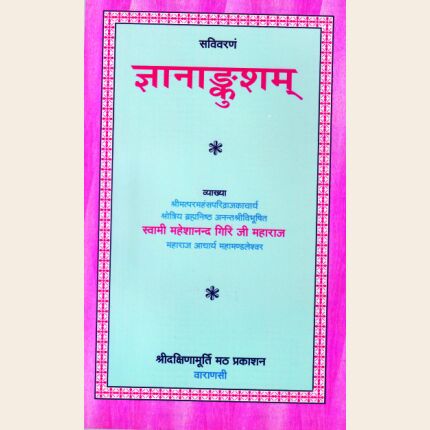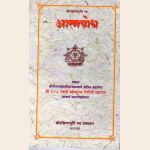
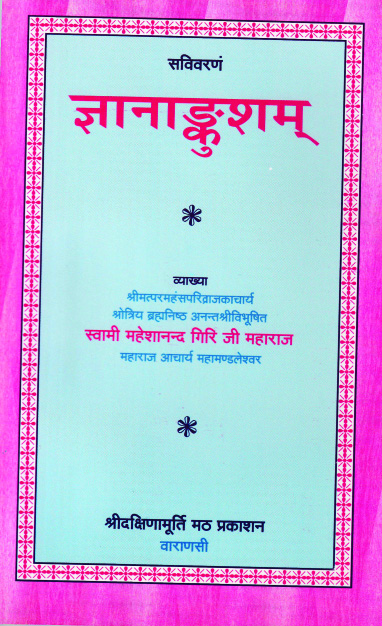
ज्ञानांकुशम
₹150
| Author, Editor or Translator | Swami Maheshananda |
|---|---|
| Bound | PB |
| Country of origin | India |
| Number of Pages | 153 |
| Publisher | Sri Dakshinamurti Math |
| Weight and Dimension | 200g. 22x14x1cm. |
| Language | Hindi |
| ISBN | N/A |
Only 1 left in stock
SHIPPING POLICY:
The customer will be provided the estimated due date, but we are not liable for any delays in the shipment procedure. The risk of loss and damage is passed to you as soon as the product is delivered. We do not arrange for reverse shipment. If a product needs to be returned, we might request you to send the products through any courier service.
RETURN POLICY:
If you return any product, we will accept it only under the following conditions:
1. If it is damaged during shipping.
2. It is defective.
We will also accept the return if the product is wrongly delivered to you or the packing is incomplete. However, we should be informed about the discrepancies within 72 hours of the product's delivery date. At the same time, the products should also be returned in their original condition.
THE REPLACEMENT CONDITIONS:
We offer you a guarantee of 14 days replacement guarantee for the products we have sold on the site adhering to certain conditions mentioned. The customers must notify us about the defect or the damage within 72 hours of receiving the products. If the customer fails to inform us within the due date, we reserve the right to reject or accept the request. We can replace the defective product with a brand-new one without charging extra. On the other hand, digital content like e-books is not returnable.
POLICY OF CANCELLATION AND CHARGES:
If there is a change in quantity or addition of items or if specific changes have been accepted, we can modify the details of the orders. All the sales are final, and the items can only be cancelled before the order is finally shipped.
Only logged in customers who have purchased this product may leave a review.
Related products
Daily Practices of the Hindus
Hindu Samskaras
The Hindu Samskaras give expression to aspirations and ideals of the Hindus. They aim at securing the welfare of the performer and developing his personality. They go back to a hoary antiquity. The Vedas, the Brahmanas, the Grhyasutras, the Dharmasutras, the Smrtis and other treatises describe the rites, ceremonies and customs here and there but they do not present them in their historical evolution.
Poems to Siva
Composed by three poet-saints between the sixth and eight centuries A.D., the Tevaram Hymns are the primary scripture of Tamil Saivism, one of the first popular large-scale devotional movements within Hinduism. Indira Peterson eloquently renders into English a substantial portion of these hymns, which provide vivid and moving portraits of the images, myths, rites, and adoration of siva and which continue to be loved and sung by the millions of flowers of the Tamil Saiva tradition. Her introduction and annotations illuminate the work's literary, religious, and culture contexts, making this anthology a rich sourcebook for the study of the South Indian popular religion.
Puja & Samskara
Sakta Contribution to Varanasi
This book incorporates a good number of paperrs on multiple aspects of Sakta traditions practised in Varanasi continuing from hoary past to-date. Beside philosophical, religious and cultural leanings the contents expose the iconographic, ritualistic and artistic rendering of the Divine Mother. Kasi or Varanasi has been a stronghold of religious and spiritual fervour, and several religious sects have contributed to its present texture. Saktism has also been a forceful current in the cultural stream of this holy city. This is evidenced by several Devi temples, Sakti-pithas, yantras, fairs and festivals associated with the worship of Mother-Goddess.
The Bridge to the Three Holy Cities
The study of holy places and pilgrimages to them is treated in the Hindu tradition as a sub-field, called tirtha, of the Dharmasastra. The Tristhalisetu or "Bridge to the Three Holy Cities" of Narayana Bhatta, written in Varanasi in the 16th century A.D., is recognized as the standard and most authoritative text of the voluminous tirtha literature.

Reviews
Clear filtersThere are no reviews yet.