


Indica Books
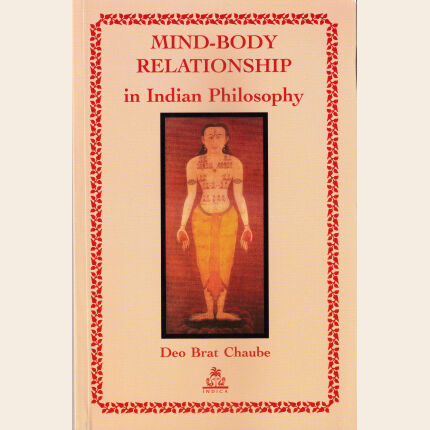
Mind Body Relationship in Indian Philosophy


Viveksar The Essence of Discernment
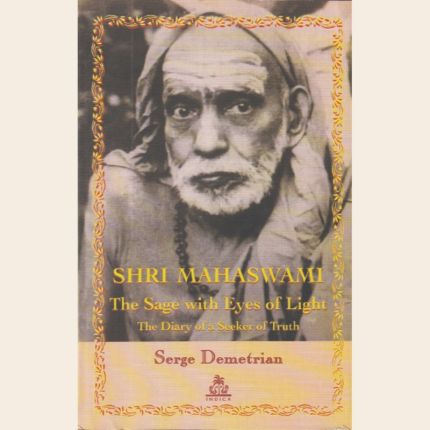
Shri Mahaswami: The Sage with Eyes of Light (PB)
Shri Chandrashekharendra Saraswati, popularly known as the Paramacharya of Kanchipuram or Shri Mahaswami, became at the age of 13 the religious head of the Kanchi Kamakoti Peetham. He was one of the most respected and venerated sages of the 20th century in India. Because of his unquestioned authority and spiritual depth he succeeded in reviving the traditional Hindu faith and beliefs, and reinvigorated the path of Advaita Vedanta.
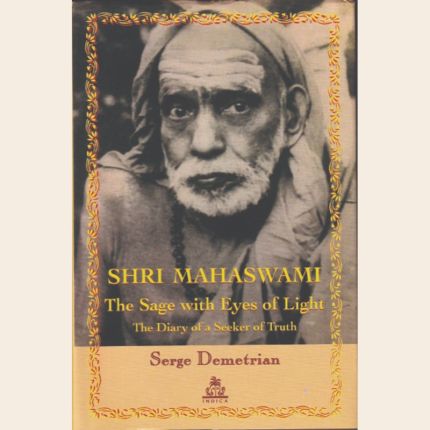
Shri Mahaswami: The Sage with Eyes of Light (HB)
Shri Chandrashekharendra Saraswati, popularly known as the Paramacharya of Kanchipuram or Shri Mahaswami, became at the age of 13 the religious head of the Kanchi Kamakoti Peetham. He was one of the most respected and venerated sages of the 20th century in India. Because of his unquestioned authority and spiritual depth he succeeded in reviving the traditional Hindu faith and beliefs, and reinvigorated the path of Advaita Vedanta.

The Sitar: The Instrument and Its Technique

श्री रमण महर्षि का उपदेश (PB)

Benares: A World Within a World (HB)

Sublime Love

Ganga Observed

Science and the Myth of Progress

The Rhythm of History
Arthur Osborne found that while academics investigated the causes of historical incidents, their research was limited, for the most part, to obvious physical causes, but they failed to clarify the overarching but hidden principles that, in his eyes, governed actions and made history. In this book he suggests a different approach to history, giving its due importance to spiritual ideas and teachers, and proposing that ideas shape the physical conditions of society more than the other way round. In his own words: "The purpose of the present book is not so much to suggest any new philosophy or interpretation of history as to draw attention to a rhythm that runs through it, establishing parallels and coincidences large and obvious enough not to be open to dispute. These will be sufficient at least to show that history is not purely haphazard and yet is also not simple progress."
Arthur Osborne observed that so-called progress was not what it appeared to be and that modern civilisation is not necessarily an advance on the discoveries and understanding that ancient civilisations had garnered and demonstrated in their development. He outlined the parallels--not be confused with uniformity--in the different phases through which the great civilizations of mankind passed. In the 18th century there was a radical divergence between the West and East, which is being overcome by the surging of a single world civilization.