


D.K. Printworld (P) Ltd.

Hindustani Music Today
Stating that Hindustani music should be rightly termed ''Art music'' and not ''classical music'', the book begins by discussing the features of Art music and presents an approach to appreciating Hindustani music. It provides a detailed understanding of the components of the raga experience in Hindustani music, including their time theory and the role of Gharanas of the musical tradition.

Interstate Relations in Northern India Circa 800-1200 CE

Khayal Vocalism
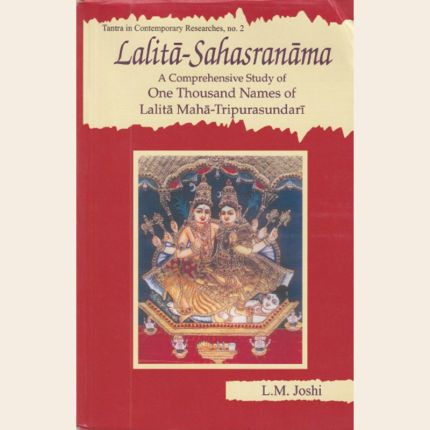
Lalita-Sahasranama
Sanskrit language indisputably occupies the stage of sanctity among the language used the world over. There are works in this language pertaining to innumerable branches of knowledge that are so varied and rich that they can only be tasted and not studied in detail in a single effort. 'Sanskrit Literature' is vast and engrossing in its variety and form. Of the many great Sanskrit literary works that have come down to us, one is the classic Lalita-sahasranama, the magnum opus of an anonymous writer.

Life and Teachings of Adi Sankaracarya
This book is intended for scholars, students and general readers. Accordingly, the early researches on the date and works of Sankara have been brought out in detail. Not only Sankara's commentaries on the Upanisads, Bhagavad Gita and the Brahma Sutra but also the books attributed to him, especially the minor works (prakarana granthas) and hymns (stotras), have been narrated purposefully for the sake of students and general readers.

Mahamudra and Atiyoga
Mahamudra and Atiyoga are particular forms of Buddhist spirituality : Mahamudra, the 'Great Seal', is considered by Tibetan teachers to be the essence of both the short path and the final instructions that conclude the gradual common and esoteric paths of Buddhist doctrines; Atiyoga of 'Extreme Union' represents the Buddhist Dzogchen or 'Great Completeness' doctrine.

Mrtyu
This study is the result of many years of research in India and Europe, in universities, museums, academies, libraries, and public and private foundations. Setting aside the impersonal, objective tone which a scientific work requires, I wish to express my gratitude to all those samnyasins, brahmanas, relatives of dead and dying persons, doms, and to all those living around cremation grounds, whom we cannot of course mention by name.

Mysticism in Shaivism and Christianity
If mysticism is hard to define, what is it then ? Or, why have mystics often spoken about what they have realized - notwithstanding the 'unspeakability' of a spiritual experience ? And, yet more significantly, how can a meeting point of different religious traditions be discovered at the mystical level ? Focussing on these and other related questions, eminent scholars from varying religious traditions here explore the nature of mystical experience in two of the world's major traditions: Hinduism and Christianity.

Navya-Nyaya Philosophy of Language
This book represents the philosophy of language in Navya-Nyaya, based upon an analysis of the ''Verbal Suffix Chapter'' of Gangesa's Tattvacintamani. Since this chapter elaborates what kind of verbal understanding is generated and discusses related issues, the book demonstrates the main features of that philosophy of language and serves as a good introduction to that. The analysis mainly deals with Gangesa, but in some cases it referes to Raghunatha. Since the book is an attempt to pursue philological exactness and philosophical analysis, it is hoped to interest not only Sanskrit scholars, but also philosophers in general.

Phenomenal Consciousness and Mind-Body Problem
The problem of explanatory gap in the phenomenal consciousness has rises in the Western philosophy mainly because the consciousness itself and its manifestations or reflections are treated separately. Whereas, according to the Vedanta school of India, the phenomenal consciousness is merely manifestations of self-consciousness which is embodied in the human beings. In this approach, the phenomenal consciousness and self-consciousness are one and the same thing because the former depends upon the latter.
Philosophical Foundation of Hinduism
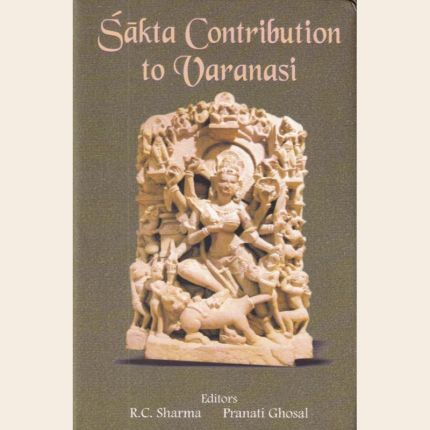
Sakta Contribution to Varanasi
This book incorporates a good number of paperrs on multiple aspects of Sakta traditions practised in Varanasi continuing from hoary past to-date. Beside philosophical, religious and cultural leanings the contents expose the iconographic, ritualistic and artistic rendering of the Divine Mother. Kasi or Varanasi has been a stronghold of religious and spiritual fervour, and several religious sects have contributed to its present texture. Saktism has also been a forceful current in the cultural stream of this holy city. This is evidenced by several Devi temples, Sakti-pithas, yantras, fairs and festivals associated with the worship of Mother-Goddess.