Mythology

Siva : The Gracious
Siva is the ancient most god of the Hindu trinity and his worship in India is of great antiquity, traces of which are found in the Harappan culture, in Vedic literature and the Puranas besides the Upanisads etc. His temples are found from Kashmir to Kanyakumari and from bengal to the western regions of the country. He indeed had been the great god with enormous following throughout the country. The present account provides the glimpses of his life in brief.

Skanda-Karttikeya

Srividya-Kosa
Sun – Worship in Ancient India

The Brahma Kumaris As a ‘Reflexive Tradition’
The aim of this book is to examine the status of tradition in the contemporary world, through a critical engagement with the recent social theory of Anthony Giddens on the emergence of a 'post-traditional society' using as a case-study, the Brahma Kumaris World Spiritual Organisation, a millenarian south Asian New Religious Movement, aims to examine the ways in which forms of tradition not only persist but also flourish in the contemporary world, and the manner in which they are drawn on and (re)created by individuals in their ongoing construction of self-identity.

The Gitagovinda of Jayadeva
It desscribes the loves of Krsna and Radha in twelve cantos containing twenty-four songs. The songs are sung by Krsna or Radha or by Radha's mind and are connected by brief narrative or descriptive passages. The appropriate musical mode and rhythm for each song are noted in the text. This poem is really a kind of drama, of the ragakavya type, since it is usually acted.

The Hidden Wisdom of the Goddess
The hidden Wisdom of the Goddess is an extended meditation in the form of a novel that follows the Devimahatmya's basic outline, condensed here and expanded there in freely imaginative ways. In the Devimahatmya the seer Medhas teaches through the language of myth, which cries out for interpretation, because little is spelled out.
The Many Faces of Murukan
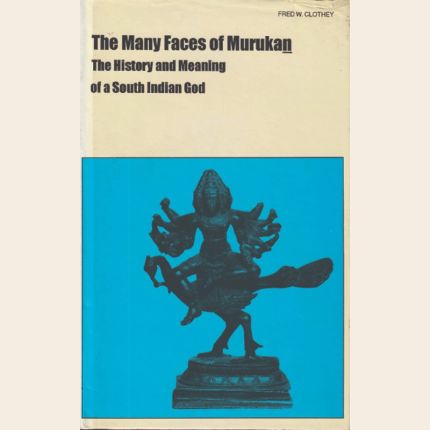
This book is a study of one of the most persistent and popular gods in south India and traces the history of the god, dwelling especially on four periods: The earliest known Tamil civilization as portrayed in classical Tamil literature and archeology; The Northern Epic period as depicted in Epic mythology; the Medieval South as depicted in the iconography and literature of the period; and contemporary Tamil Nadu as expressed in the ritual life of the cultus.

The Sakta Pithas
The sakta pithas by Dr D. C. Sircar, which is limited and precise in scope but has a wide appeal, brings honour to the young historian of Calcutta. Its basis is a critical edition of the Pithanimaya or Mahapithanirupana which is short treatise of the late period describing the fiftyone pilgrim spots associated with the Mother Goddess under some of her various names. Each one of the pithas is mentioned along with a particular form of the Goddess and that of siva associated with it.