


Indica Books

The Complete Works of Swami Vivekananda Volume 6
[In these volumes,] we have what is not only a gospel to the world at large, but also the its own children, the Charter of the Hindu Faith. What Hinduism needed, amidst the general disintegration of the modern era, was a rock where she could lie at anchor, an authoritative utterance in which she might recognise her self. And this was given to her, in these words and writings of the Swami Vivekananda. ---Sister Nivedita

The Complete Works of Swami Vivekananda Volume 7
[In these volumes,] we have what is not only a gospel to the world at large, but also the its own children, the Charter of the Hindu Faith. What Hinduism needed, amidst the general disintegration of the modern era, was a rock where she could lie at anchor, an authoritative utterance in which she might recognise her self. And this was given to her, in these words and writings of the Swami Vivekananda. ---Sister Nivedita

The Complete Works of Swami Vivekananda Volume 8
[In these volumes,] we have what is not only a gospel to the world at large, but also the its own children, the Charter of the Hindu Faith. What Hinduism needed, amidst the general disintegration of the modern era, was a rock where she could lie at anchor, an authoritative utterance in which she might recognise her self. And this was given to her, in these words and writings of the Swami Vivekananda. ---Sister Nivedita


The Concept of War
War makes life miserable for both the praties involved, the invader and invaded. No war is fought without losing men and material, stripping off societal life and political order. Simultaneously it contributes to the progress of the society and preserves the liberty and honour of a state. From the Vedic period of India and the epic period of Greece, we have records of wars, and deliberations on the logic, Philosophy, Politics, ethics, strategies (pre- and post-war) of war, and the ways of reconstructing the war-ravaged societies, paving the way for drastic social and economic changes.


The Dictionary of Hindustani Classical Music
The growing interest of the Western, especially the English-speaking nations towards the North Indian Classical Music is more evident now than ever before. It is no doubt a sign for us to be happy about; at the same time it causes us deep concern whenever we try to appreciate the great responsibility that has devolved upon us in presenting the correct interpretation of musical terms of the ancient Sanskrit Sastras.
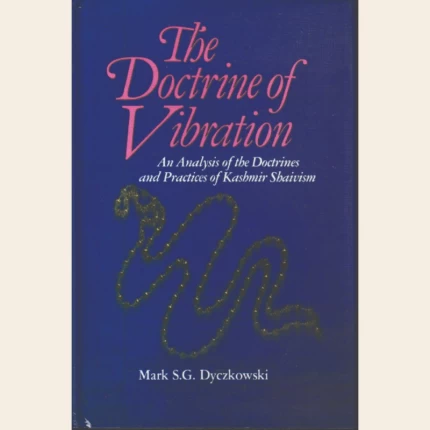
The Doctrine of Vibration
This book is significant from four points of view. First, it breaks new ground in Indian philosophy. According to the Spanda Doctrine, the self is not simply witnessing consciousness as maintained by Sankya and Vedanta, but is an active force. Second, the ultimate reality is not simply a logical system of abstract categories, but is living, pulsating energy, the source of all manifestation.


The Goddess and The Slave The Fakir, the Mother and Maldevelopment
Drawing upon the rich inter-connected levels of meaning within the Fakir culture, especially with respect to the living, breathing paradigmatic Mother--as Nature, as the Goddess to be worshipped and as the mother whose service is her identity--The Goddess and the Slave demonstrates the crisis faced by the unique Baul-Fakir sadhana, by the non-urban Bengali, and by Indian society itself through the major changes brought by modernization and globalization.
Rudrani Fakir, as an anthropologist and as a practitioner, uses the Fakir sadhana as a critical tool of understanding, presenting this objective study through her highly engaged subjective perspectrive. The first part of this book outlines the Fakir society and esoteric sadhana. The second part delves into the decline and decay of the reality of the Goddess, the changing status of women and of the true nature of wealth, and draws together the threads of the old knowledge paradigms--esoteric and modern, spoken and wordless, powerless and empowered.

The Grammar of Carnatic Music
This book argues that Carnatic music as it is practiced today can be traced to the musical practices of early/mid-eighteenth century. Earlier varieties or ''incarnations'' of Indian music elaborately described in many musical treatises are only of historical relevance today as the music described is quite different from current practices.