


Indica Books

Domain of Lord Jagannath
This little book, entitled Domain of Lord Jagannath -A Historical Study by Dr. Bikram Das, a medical professor, is a unique work in the field of cultural history relating to Lord Jagannath and the Thakur Raja of Puri. It describes how the glorious administration of the sixteenth century developed in Purushottama-dham and how the Gajapati Rajas were respected by Rajas, Zamindars and people of Orissa even after they were deprived of power and independence.

Skanda-Karttikeya

Universal History of Music
Music pervades all nature. There is nothing in nature that arouses our attention of effects our feelings so quickly as a sound. The book furnishes an account of the music of various nations-civilized to uncivilized, on the faces of the habitable globe. A few facts concerning Hindu music are given a place in the Appendix.

Man and His Becoming
Richard C. Nicholson's translation of Rene Guenon's Man and His Becoming is an exposition of the 'nature and constitution of the human being' in the light of the doctrines of Vedanta which echoes the Upanishadic message, 'there is one only without a second.' Other traditional views like Nyaya, Vaisesika, Sankhya, Yoga and Mimamsa are referred to wherever necessary.

Indian Philosophical Systems
Vedanta Desika, an illustrious successor to Ramanuja, wrote two important philosophical treatises titled Tattva-mukta-kalapa and Adhikarana-saravati, devoted primarily to establish that Visistadvaita Vedantais a sound system of philosophy. He also contributed another important philosophical work under the title Paramata-bhanga in which he presents a critical review of the main tenets of sixteen schools of thought covering.
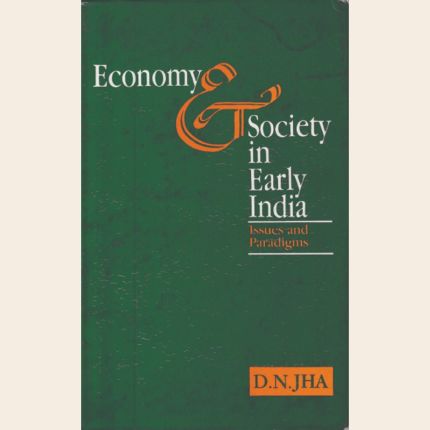
Economy & Society in Early India
This book is a refreshing study of some of the basic issues in the current historiographical debate on early Indian economy and society. It identifies major trends in the writings on early Indian economic history, and analyses the increasingly oppressive nature of ancient Indian land revenue system and the economic role of early medieval south Indian temples.

Tantric Visions of The Divine Feminine
Tantric Visions of the Divine Feminine deals with a group of ten Hindu tantric goddesses, the Mahavidyas, who embody habits, attributes, or identities, usually considered repulsive or socially subversive. It is within the context of tantric worship that devotees seek to identify themselves with these forbidding goddesses.

Ancient Indian Massage
Massage, done according to the natural laws of human anatomy and energy flow, offers the most pleasurable benefit of all daily practices. Regular massage vibrates and energizes the skin, muscles and nerves simultaneously and helps the body become light, active and full of vitality. Body heat and vitality increase as the heart and circulatory system open up to provide fresh oxygen and energy to all parts of the system while simultaneously flushing out waste gases and chemicals.

Siva Sutras
Siva Sutras : The Supreme Awakening, is revealed by the twentieth century's great philosopher saint Swami Lakshmanjoo. This spiritual treasure, gifted by God to the sage Vasugupta for the upliftment of humankind, is considered to be one of Kashmir Shaivism's most important scriptures. Here, Swami Lakshmanjoo gives the reader a penetrating vision of the glorious journey of the Supreme Awakening; the traveling from limited individuality to absolute oneness with God.
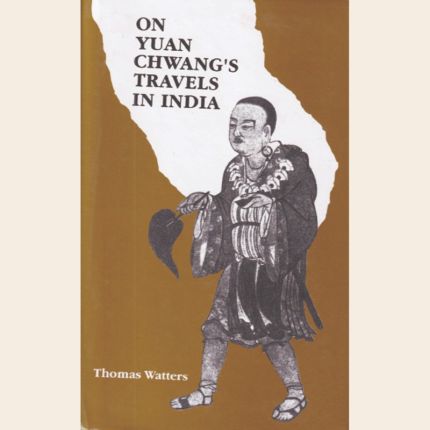
On Yuan Chwang’s Travels in India
Yuan Chwang or Hiuen Tsiang, the famous Chinese traveller, commands such a high seat of eminence that he is styled as ''one of the three mirrors that reflect Indian Buddhism'' in the country of his birth. To us in India too, he is no ordinary mirror, for had it not been for the records which he so diligently maintained of his visit to India during AD 629 to 645, a good part of our past, of our history, that too of one of the golden periods of this land, would have been lost in the limbo of oblivion. To Yuan Chwang goes the gratitude of all Indians as well as Indian historians.

Hinduism and Buddhism
Ananda Coomaraswamy's Hinduism and Buddhism, like all his writings, is a masterpiece. In this work he sets forth his ideas with his usual depth and insight to discard the wrong notions about the divergence in the basic philosophies of these two major religions that have been propounded by 'European scholars and by Indians trained in our modern sceptical and evolutionary modes of thought.

Phenomenal Consciousness and Mind-Body Problem
The problem of explanatory gap in the phenomenal consciousness has rises in the Western philosophy mainly because the consciousness itself and its manifestations or reflections are treated separately. Whereas, according to the Vedanta school of India, the phenomenal consciousness is merely manifestations of self-consciousness which is embodied in the human beings. In this approach, the phenomenal consciousness and self-consciousness are one and the same thing because the former depends upon the latter.