


DK Print World

Karma And Reincarnation
Chandragupta Maurya

Advaita Metaphysics
This book undertakes the study of Advaitavada of sankara in its depth and extension. It spells out the relative cogency of Malkani's understanding of Advaita Metaphysics and Methodology, Murty's Critique of Advaita (nondualism) and Misra's Philosophical Construction of Advaita from a linguistic perspective. This volume centres around the formulations of the Advaita theory of monism on the basis epistemological and logical analysis of knowledge in Adhyasa Bhasya.

Blissful Experience Bhakti

Jnana-Yoga

Rasa in Aesthetics
The Indian tradition of criticism is over two millennia. And its rasa theory has, from the begining, essentially influenced authors, connoisseurs and art critics alike. First expounded sometime between the 1st century BC and the 4th century AD in the eminet aesthetician, Bharata's Natyasastra, rasa theory deals with the 'emotive content' of a work of art- how it is depicted, inferred and transmitted. Dr. Patnaik's book is a unique effort that demonstrates, with diverse examples, the universality of this ancient theory and its applicability to modern Western classics.
An Introduction to the Study of Indian Poetics

Indian Philosophy and Religion

Fundamentals of Indian Philosophy
Indian philosophy reflects some of the earliest thought-traditions in human history. Its foundations can be traced to ancient minds and their capacity for insatiable curiosity and constant meditation. The Indian thinkers of old aimed their pragmatic philosophies at not just the satisfaction of intellectual curiosity or pursuit of theoretical truths but actually the assimilation of intellectually discerned and established truths into one's own personality for a life of freedom and enlightenment. This is true of modern Indian philosophers, like Sri Aurobindo and Dr. Radhakrishnan, as well. Fundamentals of Indian Philosophy reflects the vastness and richness of this philosophic tradition in a comprehensive and all-embracing yet compact presentation that lays bare the essentials of Indian philosophy.

Perspectives on The Origin of Indian Civilization
The earliest Indian inscriptions date from the third century before Christ. Archaeological and palaeo-anthropological evidence, as well as the Indian oral tradition, consistently point to the 'continuity' of the Indian Civilization back to a much earlier date. However, the question of the origin of Indian Civilization prior to that period remains open. There are three main schools of thought in this regard.
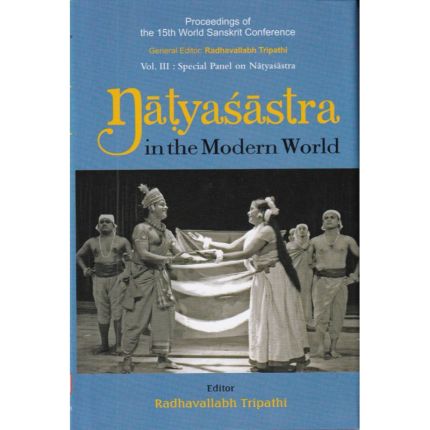
Natyasastra in the Modern World
This volume discusses in detail the divergent views on Natyasastra - its origin, concepts, philosophy, history, vrtti, impact on traditional stages, relevance in modern age and stage, and its applicability in post-modern stage. It also vividly talks about the interlinks between Natyasastra and the regional theatre forms with specific focus on south India. It therefore reinstates the fact that the regional theatric traditions have considerably contributed to the restructuring of Natyasastra texts.
Advaitic Mysticism Of Sankara
This book attempts to elaborate and clarify Sankara's understanding of brahmannubhava, in all its aspects, relying exclusively on his own writings. For this, not only the commentaries, but also the prakarana granthas have been taken into account. In the final chapter, brahmanubhava is compared with what was said about the mystic experience by two of the most authoritative exponents of christian and Islamic mysticisms, namely st, John of the cross and Jalalu' d-Din Rumi, mainly to understand Sankara's position without any ambiguity.