Shop

How to Judge A Horoscope (Volume One)
Prasna Marga is an exhaustive treatise on the various aspects of predictive astrology of immense practical utility. The work can be considered as of exceptional interest and value. The author, a Nambudari Brahmin of Kerala who wrote this book in 1650 A.D. was a renowned scholar and has culled valuable information from a number of ancient sources.

How to Live With God

Hymns to Kali

Hymns to The Goddess

I Am That
This collection of the timeless teaching of one of the greatest sages of India, Sri Nisargadatta Maharaj, regarded by many as a ''modern spiritual classic'' is a testament to the uniqueness of the seer's life and work. I Am That (now in its twenty-third printing) continues to draw new audiences and to enlighten anxious seekers for self-realization.
I Am That is a legacy from a unique teacher who helps the reader to a clearer understanding of himself as he comes to Maharaj again and again with the age-old questions, "whence am I?", "who am I?' and 'whither am I?" The listeners were never turned away from the humble abode of Maharaj.

Idealistic Thought in Indian Philosophy
The author has attempted to show how the Idealistic thought of a primary stage reached its acme step by step.The book explains what Idealism signifies in its different shades with special reference to the Idealistic schools of Indian Philosophy and also speaks about the rise and growth of Idealistic thought from the Vedic times till the final establishment of Drsti-Srsti-Vada in the Kevaladvaita Vedanta vis-a-vis the Srsti-Drsti-Vada of the same school.

Imperial Gupta Epigraphs
In Search of The Dharma
In the Company of Gods
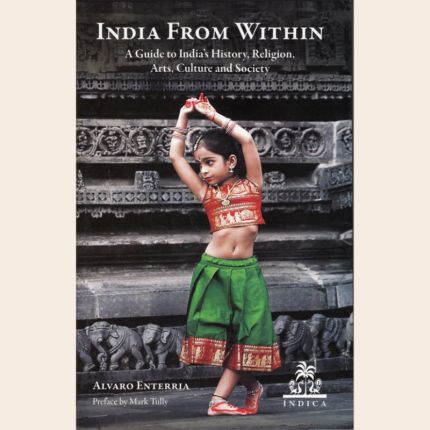
India from Within A Guide to India’s History, Religion, Arts, Culture and Society
Indian society is manifold and extremely complex. The richness of the Indian subcontinent defies and exceeds all facile explanations or generalizations, and cannot be adequately interpreted through western concepts.
This book tries to clear a path towards an understanding of this immense country, home to a civilization that has endured without interruption for millennia. In this small encyclopaedia of India, the author explains the roots and foundations of Indian civilization, covering almost every aspect of Indian culture; its broad topics include History, Religion, Society, Arts, The State, and travel. Offering an illuminating selection of information concerning many aspects of India, this is surely among the most complete cultural guides about this country and its varied cultures.
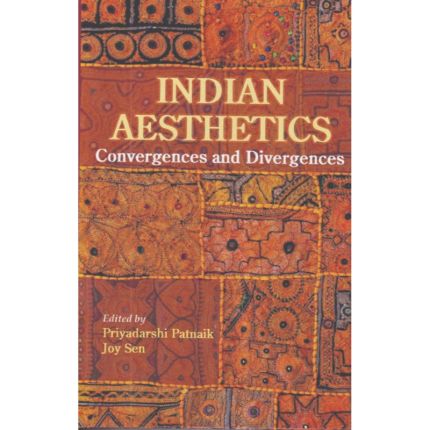
Indian Aesthetics
Indian aesthetics encompasses traditions and texts that focus on literary, visual, structural and performative productions of a wide range of art forms that delight, entertain, provoke their audience in ways that are relevant to the life. These art forms result in various responses such as delight, emotional relish, and enjoyment. In their convergence with other arts, different Indian art forms, be it cinema, dance, drama, music, literature or sculpture, have practised a ''give and take'' policy all through their history.