



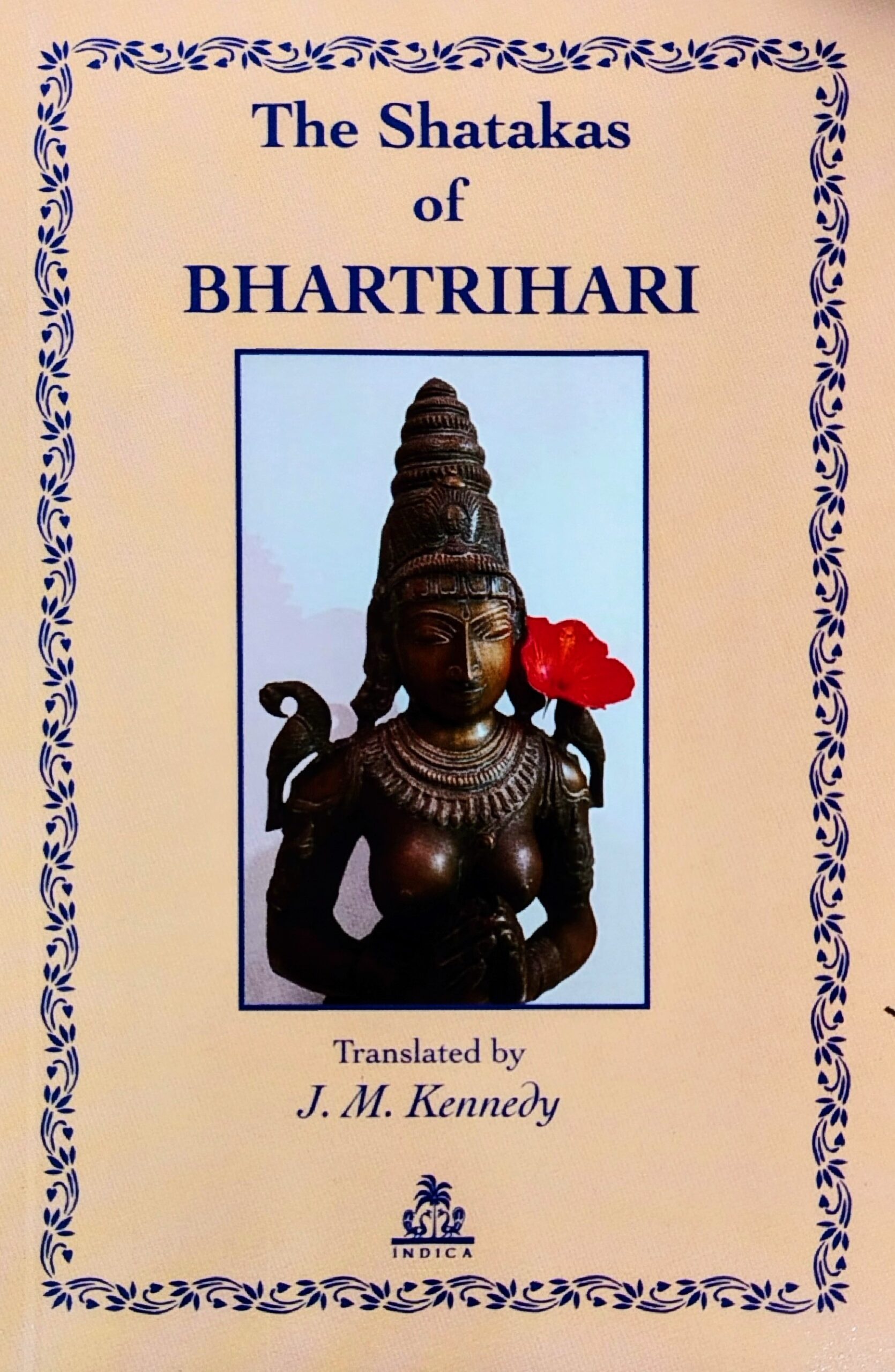
The Shatakas of Bhartrihari (Copy)
₹100
| Author, Editor or Translator | J.M. Kennedy |
|---|---|
| Bound | PB |
| Country of origin | India |
| Number of Pages | 133 |
| Publisher | INDICA BOOKS |
| Weight and Dimension | 135g. 18.5×12.5x1cm |
| Language | English |
| ISBN | 9789381120583-789381120584 |
In stock
Description
Bhartrihari is renowned as both a pholosopher grammarian and as a poet of extraordinary depth. He is usually dated between the 5th and 7th centuries CE, in a period of great splendour of classical Hindu civilization. As a grammarian, he is mainly known for his vakyapadiya. His work as a poet is known by the three Shatakas (Shatakatraya: ‘three centuries’). Whether the poet author of the Shatakas and the grammarian were the same historical individual has been debated . The Shatakas explore the fundamental conditions of human life: passion (Shringara), ethics (niti), and renunciation (vairagya). Each Shatakas addresses a distinct dimension of life. the Shringarashataka celebrateslove, beauty, and desire, yet often with an undercurrent of irony, dissatisfaction, and impermanence. The Nitishataka articulates a rigorous ethical vision, offering reflections on conduct, wisdom, friendship, power, learning, and the responsibilities of the individual in society. Its verses are marked by practical insight and moral clarity, frequntly inviking the tension between ideal vehaviour and lived reality.The Vairagyashataka completes the arc by turning decisively toward renunciation, exposing the futility of ambition, wealth, and sensory attachment, and affirming detachment as the highest form of freedom. Taken together, the Shatakas trace an inner journey from engagement with the world to disillusionment and, fanally, to spiritual withdrwal.
Only logged in customers who have purchased this product may leave a review.
Related products


Brahman and the World
This book proposes to take up the question of Universal Causation to examine thoroughly as how far it is right to regard Brahman as the Universal Cause and how far sutrakara himself lent his support to each of the interconflicting schools of Vedanta. This book should, therefore, benefit all who are devoted to the philosophic teachings of Advaita Vedanta and its preceptors.

Fundamentals of Indian Philosophy
Indian philosophy reflects some of the earliest thought-traditions in human history. Its foundations can be traced to ancient minds and their capacity for insatiable curiosity and constant meditation. The Indian thinkers of old aimed their pragmatic philosophies at not just the satisfaction of intellectual curiosity or pursuit of theoretical truths but actually the assimilation of intellectually discerned and established truths into one's own personality for a life of freedom and enlightenment. This is true of modern Indian philosophers, like Sri Aurobindo and Dr. Radhakrishnan, as well. Fundamentals of Indian Philosophy reflects the vastness and richness of this philosophic tradition in a comprehensive and all-embracing yet compact presentation that lays bare the essentials of Indian philosophy.


The Concept of War
War makes life miserable for both the praties involved, the invader and invaded. No war is fought without losing men and material, stripping off societal life and political order. Simultaneously it contributes to the progress of the society and preserves the liberty and honour of a state. From the Vedic period of India and the epic period of Greece, we have records of wars, and deliberations on the logic, Philosophy, Politics, ethics, strategies (pre- and post-war) of war, and the ways of reconstructing the war-ravaged societies, paving the way for drastic social and economic changes.


Reviews
Clear filtersThere are no reviews yet.