The Rhythm of History

195

Arthur Osborne found that while academics investigated the causes of historical incidents, their research was limited, for the most part, to obvious physical causes, but they failed to clarify the overarching but hidden principles that, in his eyes, governed actions and made history. In this book he suggests a different approach to history, giving its due importance to spiritual ideas and teachers, and proposing that ideas shape the physical conditions of society more than the other way round. In his own words:  "The purpose of the present book is not so much to suggest any new philosophy or interpretation of history as to draw attention to a rhythm that runs through it, establishing parallels and coincidences large and obvious enough not to be open to dispute. These will be sufficient at least to show that history is not purely haphazard and yet is also not simple progress."

Arthur Osborne observed that so-called progress was not what it appeared to be and that modern civilisation is not necessarily an advance on the discoveries and understanding that ancient civilisations had garnered and demonstrated in their development. He outlined the parallels--not be confused with uniformity--in the different phases through which the great civilizations of mankind passed. In the 18th century there was a radical divergence between the West and East, which is being overcome by the surging of a single world civilization.

The Sanskrit Language: An Overview

295

This book has the rare distinction of being both an introductory book and a new ground-breaking study. It is an

The Self-Shining Reality The Vedantic Method of the Three States
825

“The Self-Shining Reality” (Paramartha Cintami) is largely based on the Bhasya (commentary) of Shankaracharya on the Mandukya Upanisad and the

The Shatakas of Bhartrihari

460

Bhartrihari is renowned as both a pholosopher grammarian and as a poet of extraordinary depth. He is usually dated between

The Sitar: The Instrument and Its Technique
395

A simple and clear book for students starting to learn sitar, originally published through the iniciative of the International Institute

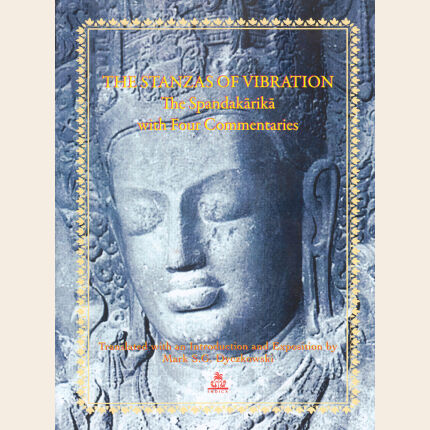
The Stanzas on Vibration (PB)

1,450

In Kashmir Shaivism, Spanda is the vibratory dynamism of the absolute consciousness. In this book the author focuses on the

The Transcendent Unity of Religions

295

Is there a “Transcendent Unity” underlying the great religions of mankind? Does not every true religion start from an historic

The Wisdom of Ananda Coomaraswamy

195

Ananda Kentish Coomaraswamy (1987-1947) was one of the best minds that India has produced in the 20th Century. By profession

Tripura Rahasya The Mystery of Goddess Tripura (Jnana Khanda)

825

The Mystery of the Goddess Tripura is a treatise that presents the mythology, theories, and practices related to the goddess

Varanasi Vista Early Views of the Holy City
1,750

Varanasi has attracted pilgrims from all over India for over 2500 years. A number of landscape artists, almost entirely from

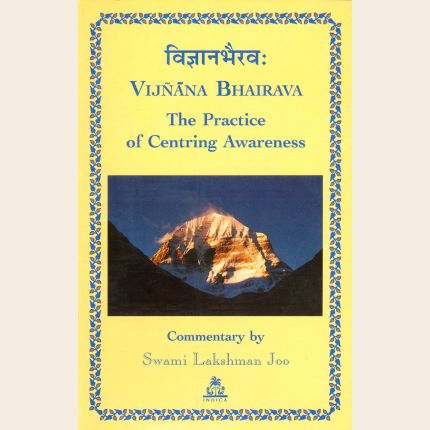
Vijnana Bhairava: The Practice of Centring Awareness

625

The Vijnana Bhairava is one of the most important Tantras of Kashmir Shaivism as far as the practical aspect of yoga of

Viveksar The Essence of Discernment

475

Viveksar is a rare scripture composed in 1755 CE by Aghoracharya Baba Kinaram, a saint in the Aghor tradition. It