


Advaita Vedanta

Blissful Experience Bhakti

Advaita Metaphysics
This book undertakes the study of Advaitavada of sankara in its depth and extension. It spells out the relative cogency of Malkani's understanding of Advaita Metaphysics and Methodology, Murty's Critique of Advaita (nondualism) and Misra's Philosophical Construction of Advaita from a linguistic perspective. This volume centres around the formulations of the Advaita theory of monism on the basis epistemological and logical analysis of knowledge in Adhyasa Bhasya.

The Heritage of Sankara

The Supreme Yoga : Yoga Vasistha
The Yoga Vasistha has been a favourite book of spiritual seekers in India these several centuries. Its special appeal lies in its thoroughly rational approach, and in its presentation of Vedanta as a philosophy to bridge the gulf between the secular and the sacred, action and contemplation, in human life, through a comprehensive and lofty spirituality.

Life and Teachings of Adi Sankaracarya
This book is intended for scholars, students and general readers. Accordingly, the early researches on the date and works of Sankara have been brought out in detail. Not only Sankara's commentaries on the Upanisads, Bhagavad Gita and the Brahma Sutra but also the books attributed to him, especially the minor works (prakarana granthas) and hymns (stotras), have been narrated purposefully for the sake of students and general readers.
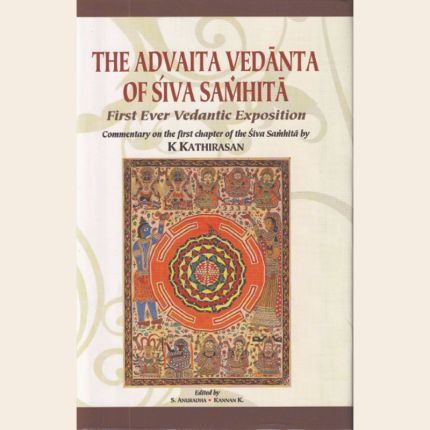
The Advaita Vedanta of Siva Samhita
Siva Samhita has come to be known as one of the three source texts for the Hatha Yoga tradition. However, it is largely unknown to the world for its clear exposition of the subject of atmajnana or Self-Knowledge consistent with the tradition of the Upanisads and Advaita Vedanta as taught by Sankaracarya.

Sarva Siddhanta Sangraha of Sankaracarya
Mind-Body Dualism
Adhyasa
The concept of Adhyasa in its three variants has to be asserted from the non-contradictory ground of Reality. In this context, there is a need to differentiate 'mere appearance' (as it appears) and 'the actual appearance' (as it is) or the unmanifest Reality. It cannot be denied that the concepts of 'Brahmatkaikya' and 'Brahmabhava' created confusion in many thinkers, but the authentic explanations by Sri Sankara steadfastly made the Advaitic perspective unchallengeable in all the times.

Advaita A Conceptual Analysis
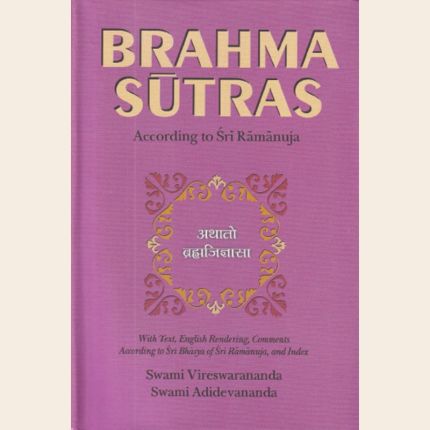
Brahma Sutras
The present compendium in English of the Sri-Bhashya, is similar to an earlier one of Sri Shankar's commentary on the Brahma-Sutras by Swami Vireswarananda. The foreword presents a scholarly resume of the Sri-Bhashya. The Introduction contains an illuminating comparative study of the commentaries by Shankara, Ramanuja, Vallabha, Nimbarka. and Madhva. It includes with a section drawing attention to the harmony underlying these different commentaries.
