


Default
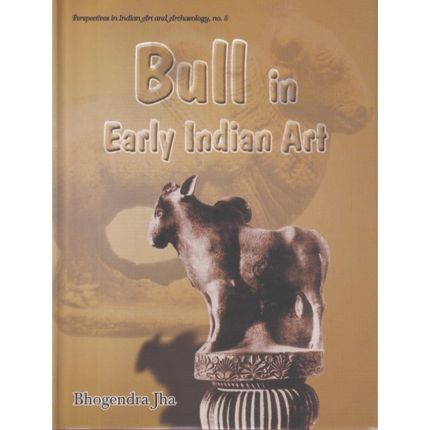
Bull in Early Indian Art

Movement And Mimesis
The author traces the growth of the techniques and forms of dancing and shows how the central tradition of the art, and also the oldest, expanded by contact with peripheral regional styles including foreign ones, and eventually merged with them into a synthessis that forms the basis of present-day classical dances of India.

Perspectives on The Origin of Indian Civilization
The earliest Indian inscriptions date from the third century before Christ. Archaeological and palaeo-anthropological evidence, as well as the Indian oral tradition, consistently point to the 'continuity' of the Indian Civilization back to a much earlier date. However, the question of the origin of Indian Civilization prior to that period remains open. There are three main schools of thought in this regard.

The Concept of War
War makes life miserable for both the praties involved, the invader and invaded. No war is fought without losing men and material, stripping off societal life and political order. Simultaneously it contributes to the progress of the society and preserves the liberty and honour of a state. From the Vedic period of India and the epic period of Greece, we have records of wars, and deliberations on the logic, Philosophy, Politics, ethics, strategies (pre- and post-war) of war, and the ways of reconstructing the war-ravaged societies, paving the way for drastic social and economic changes.

Advaita A Conceptual Analysis

Indian Philosophical Wisdom
The title of the book Indian Philosophical Wisdom: some Glimpses itself signifies its importance. Ineed, Philosophy is involved in every sphere of human life - literature, creative art, culture, etc. The author in her zeal to unravel the precious accumulated wisdom of Indian Philosophy delved in its treasure with different approaches - historical, analytical, comparative, etc. An attempt has been made in this book to expound Indian Philosophical systems and to analyse critically their logical implications.

Karma And Reincarnation

Integrating Interdisciplinarity through Philosophy
The books delves into the idea and the philosophy of interdisciplinarity, and then unravels the genealogy, dynamics, and myriad configurations of the highly complex phenomenon. It goes on to assess impact, advantages and critical issues involved in interdisciplinarity, while outlining an Indian view of it. The book, thus, explores the conceptual connections, fundamental issues and intrinsic implications of a myriad variety of interdisciplinary study and research, within and beyond academia. The book also attempts to develop necessary theoretical perspectives and a broader conceptual framework in this connection.

The Sakta Pithas
The sakta pithas by Dr D. C. Sircar, which is limited and precise in scope but has a wide appeal, brings honour to the young historian of Calcutta. Its basis is a critical edition of the Pithanimaya or Mahapithanirupana which is short treatise of the late period describing the fiftyone pilgrim spots associated with the Mother Goddess under some of her various names. Each one of the pithas is mentioned along with a particular form of the Goddess and that of siva associated with it.

The Tyagaraja Cult in Tamilnadu
Tyagaraja is a Somaskanda and the first visual representation of this composite deity can be traced to the time of pallava rule. The concept of Somaskanda is unique to Tamilnadu. The Cola monarchs were devotees of Tyagaraja. The book analyses the Tyagaraja Cult from three perspectives: as a religious synthesiser, socio-cultural integrator and legitimiser of the ideologies of the State.

The Sacred Marriage of A Hindu Goddess
Moving beyond traditional understanding of the catagory of ''sacred marriage'' derived from studies of the ancient Near East, Harman reveals that sacred marriage in India functions as a devotional metaphor for Hindu devotees, a way understanding how deities act toward one another and toward who worship them. Combining sdystematic textual study with descriptive fieldwork, Harman offers us an original and perceptive exploration of the relationship between the human and the divine in Hindu life.
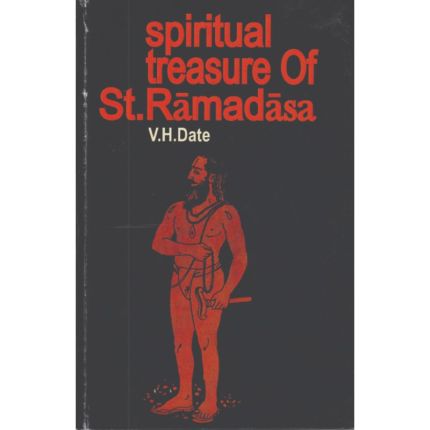
Spiritual treasure of St. Ramadasa
To write about the different modes of worshipping God and to say about the relation between the devotee and God without referencen to the speculative problems in philosophy is also easy. But to take into consideration both the intellectual quest of the philosopher and the actual devotional interest and practice of an aspirant and the experiences and the mature wisdom of a saint, and then to construct a philosophy of religion which all easy. This becomes all the more difficult when one has to deal with the polytheistic belief of the Hindus, and then to reconcile it with monotheism and monism, and to synthesize it future with mystical realization.