


Default
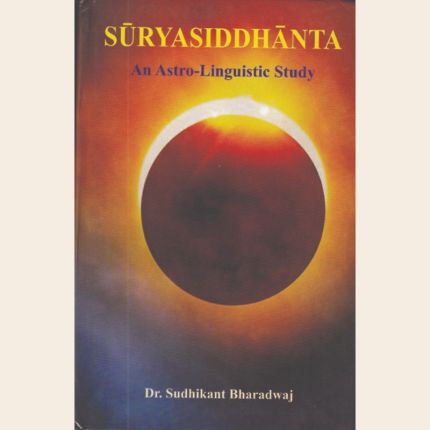
Suryasiddhanta
The real history of indian astronomy begins from the period of the Suryasiddhanta which is the only earliest full-fledged text on astronomy now extant. The copious work which India produced on the subject of astronomy in the later periods follows the system of the Suryasiddanta in all essential aspects.

The Prosody of Pingala

वराहमिहिरकृत पञ्चसिद्धान्तिका
Science and Spirituality

A Course in Indian Philosophy
Indian Philosophy its content is of course completely irrelevant to the world of greed and money-making which has replaced the remarkably idealistic societies emerging from the crucible of death and destruction in the Second World War. Then. the surviviors were glad to be alive and wanted to fill the mourning world with new joy, not with money.

The Sankhya Aphorisms of Kapila
The present translation of Aphorisms of Kapila by J.R. Ballantyne is so rendered as to make it possible for an average reader to understand the complex thought structure of Sankhya philosophy in a language that is easy and graspable. It will be of great help to those who are desirous of knowing not only the historical background of Indian thought, but also want to know as to how existential questions of life and death have been tackled.
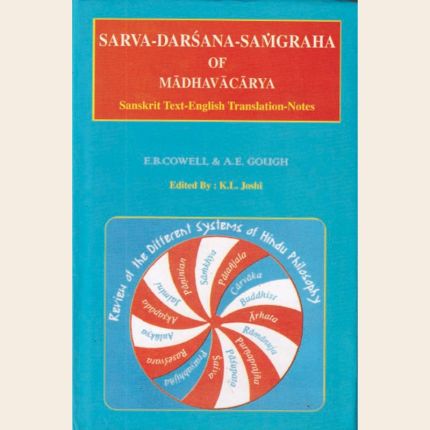
Sarva-Darsana-Samgraha of Madhavacarya

The Tarkabhasa of Kesavamisra
Tarkabhasa, a text, presents a detail discussion on Nyaya theory. It is known as an elementary treatise, a key for the beginners of the Science of Nyaya. It is quiet evident that Tarkabhasa is written by Kesava Misra, as mentioned at the end of the text. It presents the subject matter in an easy language.

The Gitagovinda of Jayadeva
It desscribes the loves of Krsna and Radha in twelve cantos containing twenty-four songs. The songs are sung by Krsna or Radha or by Radha's mind and are connected by brief narrative or descriptive passages. The appropriate musical mode and rhythm for each song are noted in the text. This poem is really a kind of drama, of the ragakavya type, since it is usually acted.

The Oracle of Rama
Oracles are always popular because we are all interested in our destiny and the meaning of our lives. Particularly we want to know the future, which is always mysterious and uncertain. The proliferation of various New Age oracles, the multiplicity of Tarot cards, and the enduring interest in the I Ching are modern proof of this.
Decolonizing Indian Studies
The present Indian academic self-understanding of its history and culture is largely Western in origin. This Western intellectual enterprise, however, went hand in hand with a Western political enterprise, i.e the colonzation of India. This raises the question : To what extent, if any, did the two developments influence each other ? It also raises another question : To what extent did West's cultural presuppositions influence its understanding of Indian civilization.

Navya-Nyaya Philosophy of Language
This book represents the philosophy of language in Navya-Nyaya, based upon an analysis of the ''Verbal Suffix Chapter'' of Gangesa's Tattvacintamani. Since this chapter elaborates what kind of verbal understanding is generated and discusses related issues, the book demonstrates the main features of that philosophy of language and serves as a good introduction to that. The analysis mainly deals with Gangesa, but in some cases it referes to Raghunatha. Since the book is an attempt to pursue philological exactness and philosophical analysis, it is hoped to interest not only Sanskrit scholars, but also philosophers in general.