


Banaras
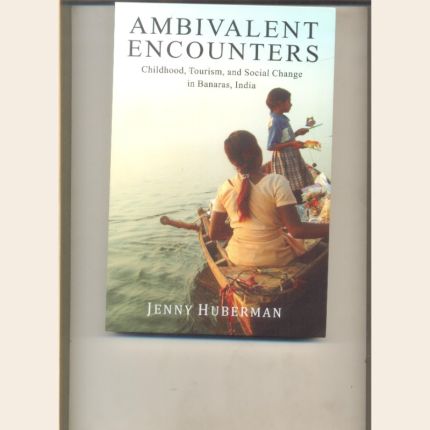
Ambivalent Encounters
Jenny Huberman provides an ethnographic study of encounters between western tourists and the children who work as unlicensed peddlers and guides along the riverfront city of Banaras, India. She examines how and why these children elicit such powerful reactions from western tourists and locals in their community as well as how the children themselves experience their work and render it meaningful.

Living, dying and transformation in Banaras : The crossing project

Mrtyu
This study is the result of many years of research in India and Europe, in universities, museums, academies, libraries, and public and private foundations. Setting aside the impersonal, objective tone which a scientific work requires, I wish to express my gratitude to all those samnyasins, brahmanas, relatives of dead and dying persons, doms, and to all those living around cremation grounds, whom we cannot of course mention by name.

From Volga to Ganga

The Sacred Complex of Kashi

Vaisnava Contribution to Varanasi

Wonderland Banaras
Banaras is the wonderland of the first sight. Banaras is the historical city of temples, trade and traditions. This is the sacred city of Siva and salvation with historical exigencies having moral, migrational and material significance. It is also the land of the great Ganga ghats whose first encounter excites a sense of admiration or wonder for their delicate beauty and fascinating charm.

A Day in Kashi
Banaras a city with many mysteries, exquisitely depicted in colour. A selection of one hundred and eight photographs depicting a day in Kashi a day out of this world. Kashi, Banaras, Varanasi one of the most ancient of living cities. One can still trace its ancient background through the face it presents today. It is a city that unfolds its deepest secrets to only a few. A few who through dedication and love come time and time again to document the most inner and hidden secrets of this ancient city.

Death in Banaras
This book is primaryly about the priests and other kinds of 'sacred specialist' who serve them:about the way in which they organise their business,and about their representations of death and understanding of the rituals over which they preside.all three levels are informed by a common ideoligical preoccupation with controlling chaos and contingency.the anthro pologist who writes about death inevitably writes about the world of the living,and Dr Parry is centrally concerned with concepts of the body and the person in contemporary hinduism,with ideas about hierarchy,renunciation and sacrifice,and with the relationship between hierarchy and notions of complementarity and holism.

KASI THE SACRED CITY OF LORD SIVA

DEAD IN BANARAS
