


Munshiram Manoharlal Publishers Pvt. Ltd.

The Lotus and The Lion
Buddhism is indisputably gaining prominence in the West, as is evidenced by the growth of Buddhist practice within many traditions and keen interest in meditation and mindfulness. In The Lotus and the Lion, the author traces the historical and cultural origins of Western Buddhism, showing that the British Empire was a primary engine for curiosity about and then engagement with the Buddhisms that the British encountered in India and elsewhere in Asia.
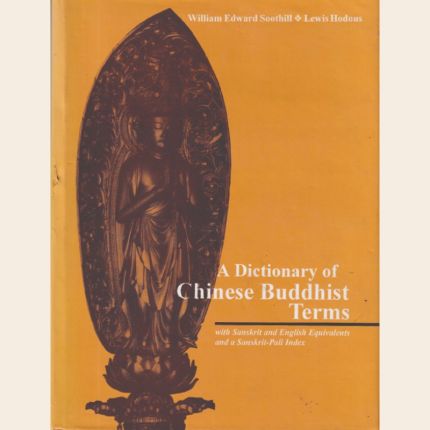
A Dictionary of Chinese Buddhist Terms
After the Dictionary went to press, Professor Soothill died. The work on the Dictionary, however, was completed. For ten years we worked together, he at Oxford and I at Hartfold, and the manuscript crossed the Atlantic four times. During his semester in New York as Visiting Professor in Columbia University and on my brief visit to Oxford, we had opportunity to consult together on some outstanding problems. The work of organizing the material and harmonizing the differences was done by Professor Soothill. He was well eequipped to undertake the task of producing a Buddhist Dictionary, having a thorough knowledge of the Chinese language.

Perspectives in Social and Economic History of Early India
The book begins with a survey of the sources of the social and economic history of early India, and reviews the writings from the late ninteenth to the mid-twentieth centuries on social history. It discusses the problems of caste and gender relations, and shows the role of divination and communication in fostering social control and cohesion.

Man and His Becoming
Richard C. Nicholson's translation of Rene Guenon's Man and His Becoming is an exposition of the 'nature and constitution of the human being' in the light of the doctrines of Vedanta which echoes the Upanishadic message, 'there is one only without a second.' Other traditional views like Nyaya, Vaisesika, Sankhya, Yoga and Mimamsa are referred to wherever necessary.

Indian Philosophical Systems
Vedanta Desika, an illustrious successor to Ramanuja, wrote two important philosophical treatises titled Tattva-mukta-kalapa and Adhikarana-saravati, devoted primarily to establish that Visistadvaita Vedantais a sound system of philosophy. He also contributed another important philosophical work under the title Paramata-bhanga in which he presents a critical review of the main tenets of sixteen schools of thought covering.

The Religion of India
Max Weber's early twentieth-century study of the religions and civilization of India is a great pioneering adventure in the sociology of ancient India. Weber's insight and analysis-especially his application of the sociological perspective to the work of classical Indologists and the religious texts available to him-were to add much to the store of the social scientist. Later, historians and archaeologist were to confirm a surprising number of Weber's theories.
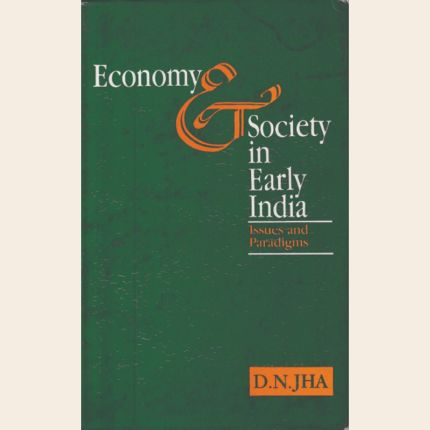
Economy & Society in Early India
This book is a refreshing study of some of the basic issues in the current historiographical debate on early Indian economy and society. It identifies major trends in the writings on early Indian economic history, and analyses the increasingly oppressive nature of ancient Indian land revenue system and the economic role of early medieval south Indian temples.
The Soul of India

Ancient Indian Massage
Massage, done according to the natural laws of human anatomy and energy flow, offers the most pleasurable benefit of all daily practices. Regular massage vibrates and energizes the skin, muscles and nerves simultaneously and helps the body become light, active and full of vitality. Body heat and vitality increase as the heart and circulatory system open up to provide fresh oxygen and energy to all parts of the system while simultaneously flushing out waste gases and chemicals.

Siva Sutras
Siva Sutras : The Supreme Awakening, is revealed by the twentieth century's great philosopher saint Swami Lakshmanjoo. This spiritual treasure, gifted by God to the sage Vasugupta for the upliftment of humankind, is considered to be one of Kashmir Shaivism's most important scriptures. Here, Swami Lakshmanjoo gives the reader a penetrating vision of the glorious journey of the Supreme Awakening; the traveling from limited individuality to absolute oneness with God.
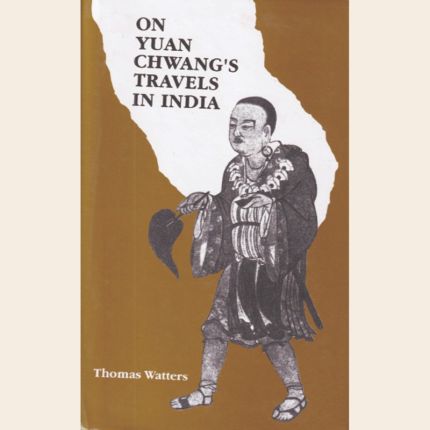
On Yuan Chwang’s Travels in India
Yuan Chwang or Hiuen Tsiang, the famous Chinese traveller, commands such a high seat of eminence that he is styled as ''one of the three mirrors that reflect Indian Buddhism'' in the country of his birth. To us in India too, he is no ordinary mirror, for had it not been for the records which he so diligently maintained of his visit to India during AD 629 to 645, a good part of our past, of our history, that too of one of the golden periods of this land, would have been lost in the limbo of oblivion. To Yuan Chwang goes the gratitude of all Indians as well as Indian historians.

Hinduism and Buddhism
Ananda Coomaraswamy's Hinduism and Buddhism, like all his writings, is a masterpiece. In this work he sets forth his ideas with his usual depth and insight to discard the wrong notions about the divergence in the basic philosophies of these two major religions that have been propounded by 'European scholars and by Indians trained in our modern sceptical and evolutionary modes of thought.