


Munshiram Manoharlal Publishers Pvt. Ltd.

Introduction To The Study of Musical Scales

The Musical Heritage Of India

Ancient India As Described By Meghasthenes And Arrian

An Introduction to the Philosophy of Trika Saivism
The aim of this book is basically to introduce the reader to the fundamental principles that Trika philosophers have enunciated in their philosophical-cum-theological treatises. Such an approach has been adopted deliberately on account of the fact that Trika system of thought, which is very rich in philosophical vocabulary, is hardly known to general public in the manner of Advaita Vedanta of Samkara.

History of the Sakta Religion
The Heritage of Sankara

The Origin of Raga
An attempt has been made to trace out the most popular and common term 'raga', its origin, techniques and also the course of its development from the Vedic period to this modern age of science. It also narrates raga in actual forms and its development through ancient and medieval times and as it is practised and performed by musicians of the present times. The style of expression is easy to understand and didactic.

The Natyasastra
The Natyasastra is probably one of the earliest and certainly one of the best treatises on Indian Dramaturgy. At the same time, the book available now is not an early one but may be as late as the seventh or eighth century AD. The authorship is traditionally ascribed to Bharata, the sage.
The eminence of Natyasastra is not that it was the first book on the subject but that it was the first comprehensive treatise on Dance, Drama and Music.
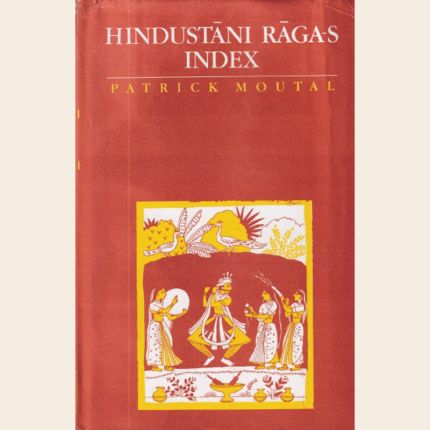
Hindustani Ragas Index
Hindustani Raga-s Index will prove quite useful to all musicians, scholars and students of music who need to consult the main contemporary Devanagari texts on Raga-s descriptions, compositions and Vistara-s. Browsing through the many tables of contents of these works in order to extract required information, is a time-consuming activity and Moutal's book, although non- exhaustive, will be a tremendous time-saver for consultation.

Dara Shikuh
Indian tradition remembers Dara Shikuh not so much as an emperor's son, but as a mystic philosopher. The great dream of his life-a dream shattered by his untimely death-was the brotherhood of all faiths and the unity of mankind. After him the vision of unity was lost in the atmosphere of hatred and rivalry created by the warring sects and religious schools, and even today we are living in the age of religious disintegration.

The Grammar of Carnatic Music
This book argues that Carnatic music as it is practiced today can be traced to the musical practices of early/mid-eighteenth century. Earlier varieties or ''incarnations'' of Indian music elaborately described in many musical treatises are only of historical relevance today as the music described is quite different from current practices.

Music of the Nations
The Music of the Nations is a comparative study of music and musical systems of the civilized nations of the world. Besides, music of India was not limited within the corners of India, but it crossed the borders of India, and contributed her art and culture to other countries. The Buddhist age was a golden one, and in this age, India had a contact with Mesopotemia.