


Motilal Banarsidass

The Gitagovinda of Jayadeva
It desscribes the loves of Krsna and Radha in twelve cantos containing twenty-four songs. The songs are sung by Krsna or Radha or by Radha's mind and are connected by brief narrative or descriptive passages. The appropriate musical mode and rhythm for each song are noted in the text. This poem is really a kind of drama, of the ragakavya type, since it is usually acted.

Gilles Deleuze’s Difference and Repetition
This is the first critical introduction to Difference and Repetition, Gilles Deleuze's most important work of philosophy and one of the most significant texts of contemporary philosophy. In offering a critical analysis of Deleuze's methods, principles and arguments, the book enables readers to engage with the revolutionary core of Deleuze's philosophy and take up favourable or critical positions with respect to its most innovative and controversial ideas. The book will also help to extend Deleuze's work to philosophers working in the analytic tradition.

The Supreme Yoga : Yoga Vasistha
The Yoga Vasistha has been a favourite book of spiritual seekers in India these several centuries. Its special appeal lies in its thoroughly rational approach, and in its presentation of Vedanta as a philosophy to bridge the gulf between the secular and the sacred, action and contemplation, in human life, through a comprehensive and lofty spirituality.

The Timing of Events
The Timing of Events fulfils an important gap in classical astrological literature. The ancient seers with yogic siddhis did not need rules for predicting future events. They clairvoyantly saw the future course of events. The astrological principles are given for those who are not so evolved. The astrological principles aim at helping those who are interested to live a life according to the evolutionary course of their everyday life.

Essentials of Ayurveda
There is a growing consciousness all over the world to know about Ayurveda, the earliest medical system of India, which has survived the vicissitudes of time for centuries and is still living and acting with vigour. Initially Ayurveda was one whole but later on was divided into eight specialities (angas) and still further, in present times, into sixteen ones.
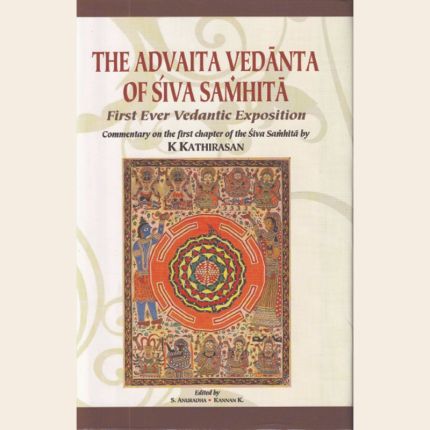
The Advaita Vedanta of Siva Samhita
Siva Samhita has come to be known as one of the three source texts for the Hatha Yoga tradition. However, it is largely unknown to the world for its clear exposition of the subject of atmajnana or Self-Knowledge consistent with the tradition of the Upanisads and Advaita Vedanta as taught by Sankaracarya.

The Chakra-Handbook

The Kundalini Book of Living & Dying
The Kundalini Book of Living and Dying shows how to awaken Kundalini and experience the power of spiritual rebirth. It describes the seven divisions of the universe and details of the astral plane, the properties of the soul, scientific evidence of the soul's existence, and various methods of achieving higher consciousness through Kundalini awakening.

Vijnana Bhairava or Divine Consciousness
Vijnanabhairava is a very ancient book on yoga. It studiously eschews mechanical worship,external rites and ceremonies and goes directly to the heart of the problem of the union of humanconsciousness withthe Divine. There is no theoretical discussion in the Book.It describes112 types of yoga each of which is a precious gem delineating the mystic approach to the Divine. For this purpose, it makes full use of all the aspects of human life--prana, manas, imagination and intuition.
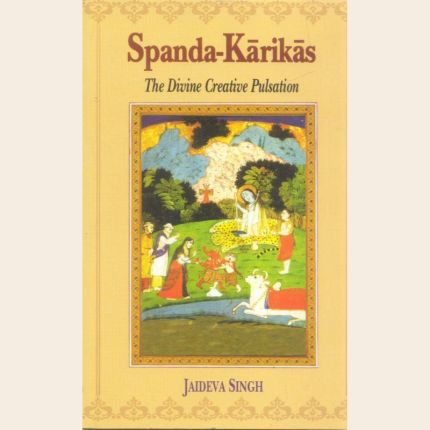
Spanda-Karikas

