


Indica Books

Buddhism
This book by a renowned Pali scholar is of great academic worth as it expounds the seminal ideas, key concepts and basic theories of Buddhist thought pertaining to dhamma and abhidhamma. It is a well thiught out work based on wide study and deep thinking of the concerned literature. It touches the kernel of Buddhist ethics and philosophy. According to Indian culture cosmic process and humanlife is teleological, purposive and goal-oriented.
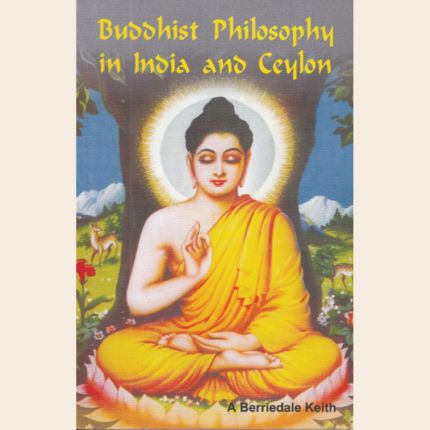
Buddhist Philosophy in India and Ceylon
This work attempts to dispel many misconceptions about the origin and development of Buddhist thought and philosophical systems. The approach adopted by the author steers clear of the customary attempts which try to assess the measure in which Buddhism, in the course of its development, attains conceptions familiar in the modern thought
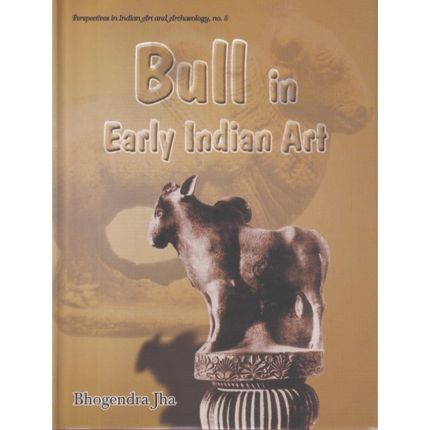
Bull in Early Indian Art

Caraka Samhita Vol. 1 – Sutra sthana and Nidana sthana
Caraka samhita represents one important branch of Ayurveda known as kaya cikitsa (inner medicine). Other seven branches also adopt these doctrines only. This has made caraka samhita, a source book for all.
In view of its importance and popularity, many scholars have written commentaries on it. Many of these are losta nd among the available ones, the commentary of Cakrapani datta known as Ayurveda dipika is considered the best. Hence its translation and inclusion in this book.
Chandragupta Maurya

Changing Mind

Chomsky’s Internalist View of Language

Classical Indian Dance in Literature and the Arts
The book vividly presents, analyses and critiques the varied facets of Indian aesthetics, especially the theory and technique of classical Indian dance, while doing a penetrating study of interrelationship that dancing has with literature, sculpture and music. In doing so, it surveys and analyses the contribution of great Sanskrit authors, theoreticians, playwrights of ancient and classical India such as Bharata, Bhasa, Kalidasa, Sudraka, Bhavabhuti, Abhinavagupta, Jayadeva and many more along with numerous Bhasa scholars of arts, aesthetics and literature, covering each and every nook and corner of the Indian sub-continent.

Classical Indian Philosophy Reinterpreted

Confusions in Advaita Vedanta

Confusions in Advaita Vedanta (HB)

Contemporary Indian Philosophy
The present study seeks to highlight these aspects of Contemporary Indian Philosophy. It is an attempt to re-think, in an academic manner, the thoughts of the contemporary thinkers, Swami Vivekananda, Mahatma Gandhi, Rabindranath Tagore, Sri Aurobindo, Krishna Chandra Bhattacharya, S. Radhakrishnan, and Mohammad Iqbal. Different aspects of their thoughts have been systematised, categorised and placed under suitable philosophical heads in this work.