


DK Print World

Classical Indian Dance in Literature and the Arts
The book vividly presents, analyses and critiques the varied facets of Indian aesthetics, especially the theory and technique of classical Indian dance, while doing a penetrating study of interrelationship that dancing has with literature, sculpture and music. In doing so, it surveys and analyses the contribution of great Sanskrit authors, theoreticians, playwrights of ancient and classical India such as Bharata, Bhasa, Kalidasa, Sudraka, Bhavabhuti, Abhinavagupta, Jayadeva and many more along with numerous Bhasa scholars of arts, aesthetics and literature, covering each and every nook and corner of the Indian sub-continent.

Integrating Interdisciplinarity through Philosophy
The books delves into the idea and the philosophy of interdisciplinarity, and then unravels the genealogy, dynamics, and myriad configurations of the highly complex phenomenon. It goes on to assess impact, advantages and critical issues involved in interdisciplinarity, while outlining an Indian view of it. The book, thus, explores the conceptual connections, fundamental issues and intrinsic implications of a myriad variety of interdisciplinary study and research, within and beyond academia. The book also attempts to develop necessary theoretical perspectives and a broader conceptual framework in this connection.
Aesthetics

Theory of Karma
The ancient Vedantic knowledge reinforced by Brahmasutra and Bhagavadgita establish that it is, purely and solidly, the result (karmaphala) of earlier actions (karmas) of each one of the sentient entities. This is a strong and formidable solution to the unanswered questions like why does, one child being blessed to be born in either rich or healthy and sattvic family and another child being consigned to be born in a family living in poor conditions or unhealthy tamasic environment.
Indian Aesthetics
Indian aesthetics encompasses traditions and texts that focus on literary, visual, structural and performative productions of a wide range of art forms that delight, entertain, provoke their audience in ways that are relevant to the life. These art forms result in various responses such as delight, emotional relish, and enjoyment. In their convergence with other arts, different Indian art forms, be it cinema, dance, drama, music, literature or sculpture, have practised a ''give and take'' policy all through their history.

Speaking of Dance
The book highlights how these time-honoured writing have contributed to the evolution of classical dancing in India. And, yet more significantly perhaps, the author ventures into a comparatively uncharted terrain seeking to explore the status of performing arts (including dance) in early Jain tradition. Focusing on the position of dancing in the contemporary cultural life of India, Mandakranta Bose shows how classical dance in India today has achived a creative blend of tradition and modernity, leading to a vigorous revival of a great heritage, a part of the larger effort towards 'nationalist rediscovery'.

Jainism Before 650 BCE
Ancient history of India reveals that there were two parallel traditions in India, viz. Vedic and Sramanic. The Sramana Tradition includes Jainism, Buddhism and others such as the Ajivikas and Ajnanas. Jain religious tradition is one of the oldest living religions of India. Historicity of 24th Tirthankara Mahavira in sixth century BCE is well established. The Jain records mention the name of 23 tirthankaras before Mahavira. Among them Parsvanatha was the 23rd and Neminatha was the 22nd.

Idealistic Thought in Indian Philosophy
The author has attempted to show how the Idealistic thought of a primary stage reached its acme step by step.The book explains what Idealism signifies in its different shades with special reference to the Idealistic schools of Indian Philosophy and also speaks about the rise and growth of Idealistic thought from the Vedic times till the final establishment of Drsti-Srsti-Vada in the Kevaladvaita Vedanta vis-a-vis the Srsti-Drsti-Vada of the same school.

Indian Philosophical Wisdom
The title of the book Indian Philosophical Wisdom: some Glimpses itself signifies its importance. Ineed, Philosophy is involved in every sphere of human life - literature, creative art, culture, etc. The author in her zeal to unravel the precious accumulated wisdom of Indian Philosophy delved in its treasure with different approaches - historical, analytical, comparative, etc. An attempt has been made in this book to expound Indian Philosophical systems and to analyse critically their logical implications.
Hindustani Sangeet And a Philosopher of Art
The book is decidedly the very first of its kind. It seeks to weigh some basic facts and concepts of Hindustani sangeet (music, rhythm and Kathak dance) against the art theories of Susanne K. Langer, an eminent aesthetician of the recent past; But now here without meticulious attention to the text of her writings. In the chapter on music, while discussing Langer's emphasis on 'commanding form' in a total performance, the author proposes a quit new defination of raga which seeks to integrate the various points in its traditional characterizations. The third chapter too, which deals with Langer's view of rhythm, is not merely explanatory, but ventures to propose a fresh and fairly defensible definition of rhythm.
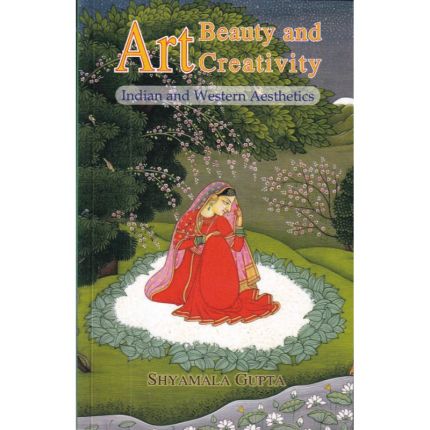
Art Beauty and Creativity
The book is an attempt, among other things, to bring together Indian and Western theories of art, and engage them in a constructive debate with one another. In recent philosophical thinking about art, it has been suggested that the concept of art is a local institutional concept. It is institutions located within a culture that determine-so the argument goes- whether and whether it is good or bad art. While this may be true ofthe concept of art, as it taken the shape in modern west, there is, surely, a larger, more global concept of art which links it with our concern, the beauty,which is common to all mankind.The book is an attempt, among other things, to bring together Indian and Western theories of art, and engage them in a constructive debate with one another. In recent philosophical thinking about art, it has been suggested that the concept of art is a local institutional concept. It is institutions located within a culture that determine-so the argument goes- whether and whether it is good or bad art. While this may be true ofthe concept of art, as it taken the shape in modern west, there is, surely, a larger, more global concept of art which links it with our concern, the beauty,which is common to all mankind.
