


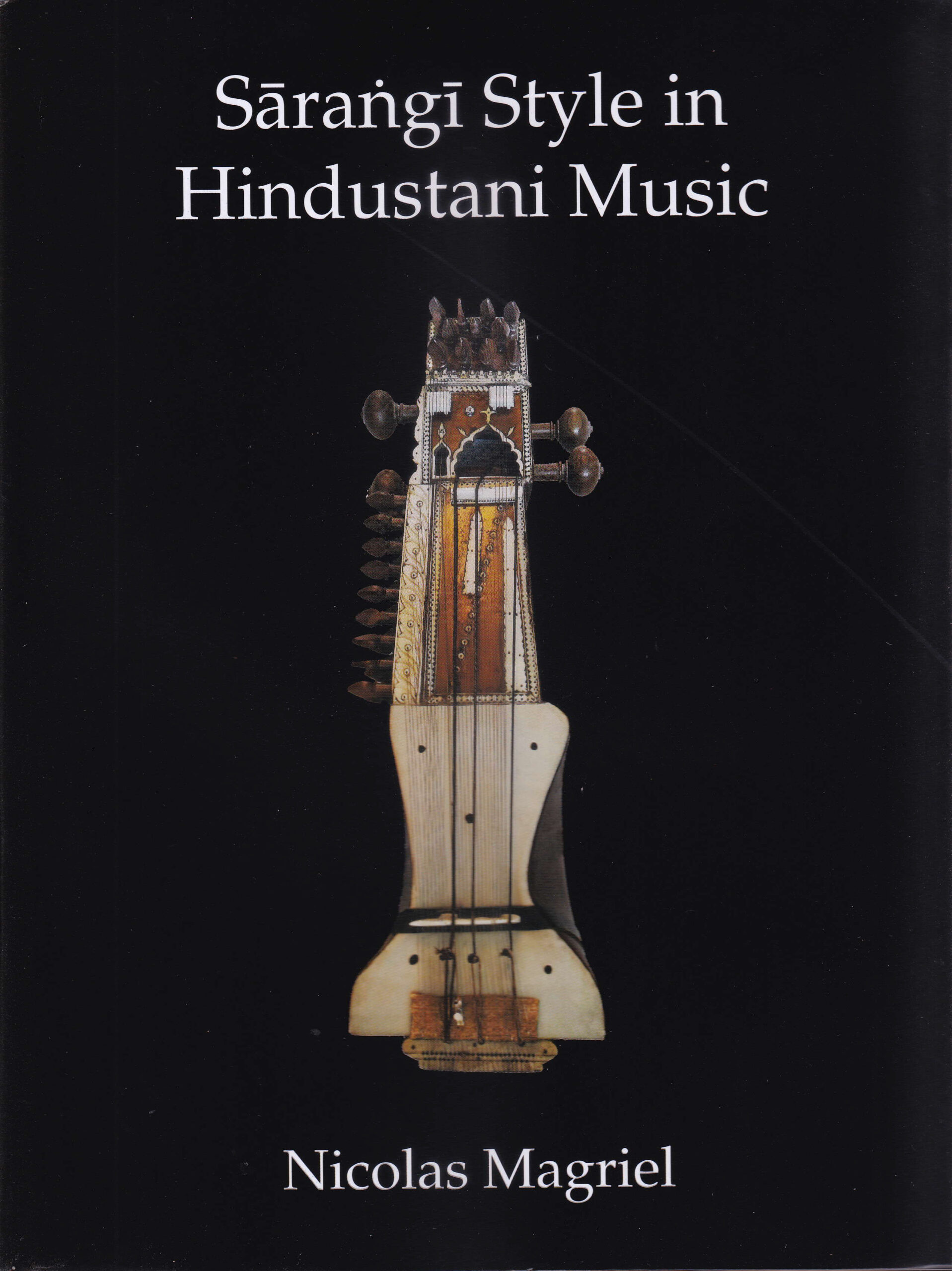
Sarangi Style in Hindustani Music
₹1,950
| Author, Editor or Translator | Nicolas Magriel |
|---|---|
| Bound | HB |
| Country of origin | India |
| Number of Pages | 585 |
| Publisher | INDICA BOOKS |
| Weight and Dimension | 1760g 29 X 22.5 X 4 Cm. |
| Language | English |
| ISBN | 9789381120408 |
In stock
Description
This is the most complete book on any Indian instrument.
The sarangi is the main bowed instrument of Hindustani music. It has three gut melody strings that are stopped by the left-hand cuticles or the skin above the nails. Around 36 sympathetic strings give a hauntings echo. Traditionally the sarangi’s public role has been to provide melodic accompaniment for vocal music, but its players have always practised and performed solo sarangi in their homes and at musicians’ gatherings. The constraints posed by the sarangi’s unusual construction and technique have given birth to a unique instrumental manifestation of vocal music that has never before been examined in a musicological work.
This beautifully illustrated book attempts to answer these questions: What is sarangi music? In what ways does it reflect or differ from the vocal music on which it is based? In what ways do the unique features of the sarangi and its technique affect its capacity to emulate vocal music? The approach is empirical, supported by extensive sargam transcription and analysis of video-recorded music and informed by the author’s fifty years of experience as a student, performer and teacher of the sarangi and Hindustani vocal music. The discussion is supplemented by 170 online video files and 555 audio examples. Most of these materials are supplied in both normal-speed and half-speed versions.
For sale only in South Asia
Only logged in customers who have purchased this product may leave a review.
Related products


Hindustani Music
The book makes complex musicological concepts accessible to non-academic readers, and contributes significantly to widening the understanding of contemporary trends in Hindustani music. Written by an author of impeccable credentials as a musician, researcher, and author, this book is a very significant addition to the body of authoritative writing on 20th century Hindustani music.

Hindustani Sangeet And a Philosopher of Art
The book is decidedly the very first of its kind. It seeks to weigh some basic facts and concepts of Hindustani sangeet (music, rhythm and Kathak dance) against the art theories of Susanne K. Langer, an eminent aesthetician of the recent past; But now here without meticulious attention to the text of her writings. In the chapter on music, while discussing Langer's emphasis on 'commanding form' in a total performance, the author proposes a quit new defination of raga which seeks to integrate the various points in its traditional characterizations. The third chapter too, which deals with Langer's view of rhythm, is not merely explanatory, but ventures to propose a fresh and fairly defensible definition of rhythm.

The Origin of Raga
An attempt has been made to trace out the most popular and common term 'raga', its origin, techniques and also the course of its development from the Vedic period to this modern age of science. It also narrates raga in actual forms and its development through ancient and medieval times and as it is practised and performed by musicians of the present times. The style of expression is easy to understand and didactic.


Reviews
Clear filtersThere are no reviews yet.