


Indian Philosophy
Mind-Body Dualism

Navya-Nyaya Philosophy of Language
This book represents the philosophy of language in Navya-Nyaya, based upon an analysis of the ''Verbal Suffix Chapter'' of Gangesa's Tattvacintamani. Since this chapter elaborates what kind of verbal understanding is generated and discusses related issues, the book demonstrates the main features of that philosophy of language and serves as a good introduction to that. The analysis mainly deals with Gangesa, but in some cases it referes to Raghunatha. Since the book is an attempt to pursue philological exactness and philosophical analysis, it is hoped to interest not only Sanskrit scholars, but also philosophers in general.

Notes on Religion and Philosophy

Out Of The Labyrinth

Outlines Of Indian Philosophy
This work is based upon the lectures which I delivered for many years at the Mysore University and is published with the intention that it may serve as a text-book for use in colleges where Indian philosophy is taught. Though primarily intended for students, it is hoped that the books may also be of use to others who are intersted in the Indian solution of familiar philosophical problems. Its foremost aim has been to give a connected and, so far as possible within the limits of a single volume, a compreshensive account of the subject; but interpretation and criticism, it will be seen, are not excluded.

Philosophy Of Peace

Presuppositions Of India’s Pholosophies

Sarva Siddhanta Sangraha of Sankaracarya
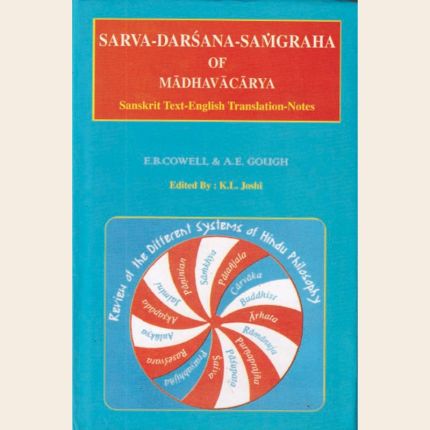
Sarva-Darsana-Samgraha of Madhavacarya

Saundaryalahari of Sankaracarya
The Saundaryalahari has fascinated and puzzled generations of scholars and laypersons; subject to continuing study and debate, till today, such details as the authorship of the 100 verses named the Saundaryalahari remain a matter of contention, particularly among scholars.
Nataraja Guru worked on the translation and commentary of the Saundaryalahari for a period of three and a half years, it is his last work and comes at the end of a life dedicated to the pursuit of the Absolute and those familiar with his work will recognize in it a kind of summing up of his life and teachings.

Science And Spirituality
A dialogue between Science and spirituality is a necessity in our times where both, differences and mutual enrichment of the two great fields of human approach to reality, are taking place. This volume adresses this need from the perspective of different areas of science and spiritual tradition. The starting point is the intention of the founder of the IIAS, Dr S. Radhakrishnan, who saw that '' both the practice of science and experience of spirituality are intimately related to being human ''.