


Indian Philosophy

Fundamentals of Indian Philosophy
Indian philosophy reflects some of the earliest thought-traditions in human history. Its foundations can be traced to ancient minds and their capacity for insatiable curiosity and constant meditation. The Indian thinkers of old aimed their pragmatic philosophies at not just the satisfaction of intellectual curiosity or pursuit of theoretical truths but actually the assimilation of intellectually discerned and established truths into one's own personality for a life of freedom and enlightenment. This is true of modern Indian philosophers, like Sri Aurobindo and Dr. Radhakrishnan, as well. Fundamentals of Indian Philosophy reflects the vastness and richness of this philosophic tradition in a comprehensive and all-embracing yet compact presentation that lays bare the essentials of Indian philosophy.

Six Vedic Systems of Indian Philosophy
This book professes to be no more than a description of some of the salient points of each of the six systems of Indian philosophy. It does not claim to be exhaustive. It is calculated to appeal to the beginners and to arouse their curiosity in the subject. I hope that this presentation of the fundamental tenents of the six systems of Indian philosophy will be superseded by a more comprehensive examination of Indian philosophy.

Indian Philosophy and Religion

Fundamentals of the Philosophy of Tantras

The Vibrating Universe
The Vibrating Universe synthesizes the superstring theory of modern physics and the vibration concept of Advaita Vedanta and Kashmiri Saivism. The Philosophical problem of monism versus pluralism, as given in Indian philosophy, Western philosophy and classical as well as modern science, has been analytically presented. In this attempt, dualism and pluralism have been rejected, and non-dualism has been re-established.

The Concept of War
War makes life miserable for both the praties involved, the invader and invaded. No war is fought without losing men and material, stripping off societal life and political order. Simultaneously it contributes to the progress of the society and preserves the liberty and honour of a state. From the Vedic period of India and the epic period of Greece, we have records of wars, and deliberations on the logic, Philosophy, Politics, ethics, strategies (pre- and post-war) of war, and the ways of reconstructing the war-ravaged societies, paving the way for drastic social and economic changes.
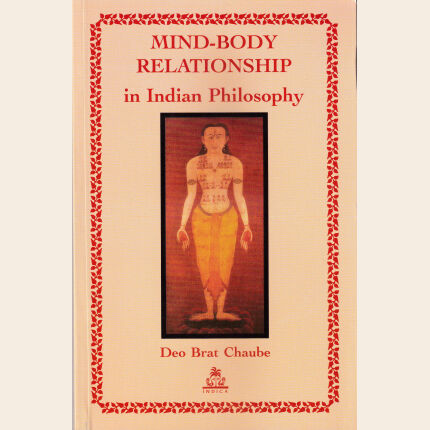
Mind Body Relationship in Indian Philosophy


The Sankhya Aphorisms of Kapila
The present translation of Aphorisms of Kapila by J.R. Ballantyne is so rendered as to make it possible for an average reader to understand the complex thought structure of Sankhya philosophy in a language that is easy and graspable. It will be of great help to those who are desirous of knowing not only the historical background of Indian thought, but also want to know as to how existential questions of life and death have been tackled.

The Vedanta Doctrine of Sri Sankaracarya


Brahman and the World
This book proposes to take up the question of Universal Causation to examine thoroughly as how far it is right to regard Brahman as the Universal Cause and how far sutrakara himself lent his support to each of the interconflicting schools of Vedanta. This book should, therefore, benefit all who are devoted to the philosophic teachings of Advaita Vedanta and its preceptors.