


Default

Abhinaya Darpanam
Dance studies across genres require multiple approaches for an understanding of the sociological, phenomenological, political, cultural, philosophical and aesthetical practices that influences the dance's kinesthetic and existential character. In the context of Bharatanatyam, the moment of explaining shifting ideologies and its impact on the form, content and process, is a moment of convergence.

Riven by Lust
Riven by Lust explore the tale of a man accused of causing the fundamental schism in early Indian Buddhism, but not before he was sex with his mother and kills his father. In tracing this Indian Buddhist Oedipal tale, Jonathan Silk follows it through texts in all of the major canonical languages of Buddhism, Sanskrit, Pali, Tibetan, Chinese, and Japanese, along the way noting parallels and contrasts with classical and medieval European stories such as the legend of the Oedipal Judas.

The Religion of India
Max Weber's early twentieth-century study of the religions and civilization of India is a great pioneering adventure in the sociology of ancient India. Weber's insight and analysis-especially his application of the sociological perspective to the work of classical Indologists and the religious texts available to him-were to add much to the store of the social scientist. Later, historians and archaeologist were to confirm a surprising number of Weber's theories.

Speaking of Dance
The book highlights how these time-honoured writing have contributed to the evolution of classical dancing in India. And, yet more significantly perhaps, the author ventures into a comparatively uncharted terrain seeking to explore the status of performing arts (including dance) in early Jain tradition. Focusing on the position of dancing in the contemporary cultural life of India, Mandakranta Bose shows how classical dance in India today has achived a creative blend of tradition and modernity, leading to a vigorous revival of a great heritage, a part of the larger effort towards 'nationalist rediscovery'.

Death Must Die
Death Must Die gives an intimate first-hand account of a courageous woman's spiritual quest in close association with several of India's greatest modern saints. Unfolding against the back-drop of Banaras in the 1940s, where she lived as a teacher and musician, we are given an in-depth picture of her intense relationship with the extraordinary woman who becomes here guru--Sri Anandamayee Ma.

The Khecarividya of Adinatha

Introduction To The Study of Musical Scales
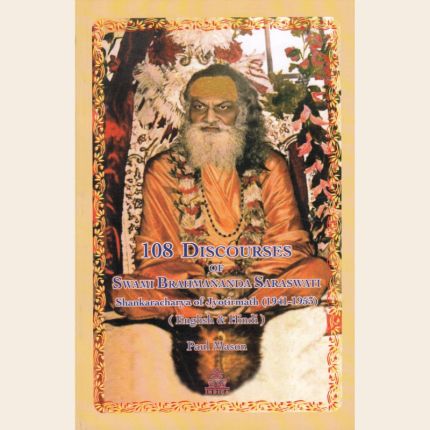
108 Discourses of Swami Brahmananda Saraswati Shankaracharya of Jyotirmath (1941-1953) (Hindi and English)
We are fortunate in that many of Swami Brahmananda's 'Upadesha' (discourses or sermons) were transcribed, and published in the ashram newsletter of 'Shri Shankaracharya Upadesha'. Now these most important words of Shankaracharya Swami Brahmanand Saraswati are being made available in this special edition, both in their original Hindi and in English, with translation done by Paul Mason.


Dimensions of Panini Grammar

The Grammar of Carnatic Music
This book argues that Carnatic music as it is practiced today can be traced to the musical practices of early/mid-eighteenth century. Earlier varieties or ''incarnations'' of Indian music elaborately described in many musical treatises are only of historical relevance today as the music described is quite different from current practices.
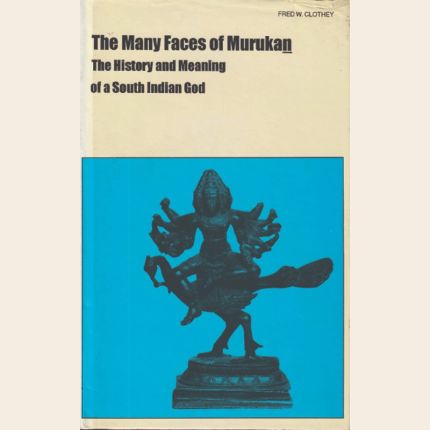
The Many Faces of Murukan
This book is a study of one of the most persistent and popular gods in south India and traces the history of the god, dwelling especially on four periods: The earliest known Tamil civilization as portrayed in classical Tamil literature and archeology; The Northern Epic period as depicted in Epic mythology; the Medieval South as depicted in the iconography and literature of the period; and contemporary Tamil Nadu as expressed in the ritual life of the cultus.