Default
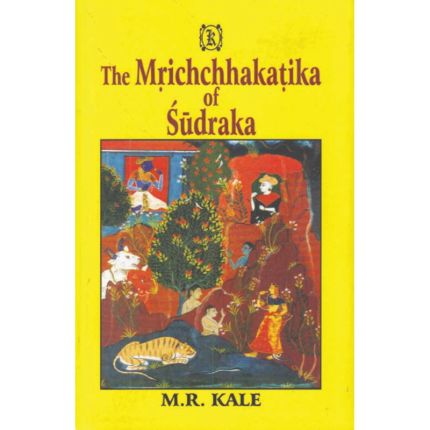
The Mrichchhakatika of Sudraka
Edited with the Commentary of Prithvidhara (enlarged where necessary), Various Readings, A Literal English translation, Notes, and an exhaustive Intrduction. No apology is needed for this neew edition of the Mrichchhakatika, as there is at present no suitable edition available which satisfies the needs of the University students, who have often to study this play for their examination.

The Music of India
This is an attempt to bring, to bear a ''scientific'' attitude to Indian musicological problems. Tools and methods of modern science have been employed to probe into musical phenomena and Indian music history. No other term is perhaps so operatively basic as the tonic-drone in melodic music and today the tambura is the most important drone in Indian music. Importance of the emergence of the drone in Indian music history has been discussed at length, in terms of neuro-physiological dynamics.

The Musical Heritage Of India

The Musician and His Art
In this book, the author relentlessly pursues his intellectual aims by borrowing ideas from a wide range of disciplines : sociology, linguistics, cultural anthropology, acoustics, aesthetics, demography, economics, marketing finance, psycho-analysis, mythology, philosophy and even mathematics. Despite its diverse intellectual canvas, the book retains the essential ''Indian-ness'' of the author's argument, and simultaneously addresses an international readership.
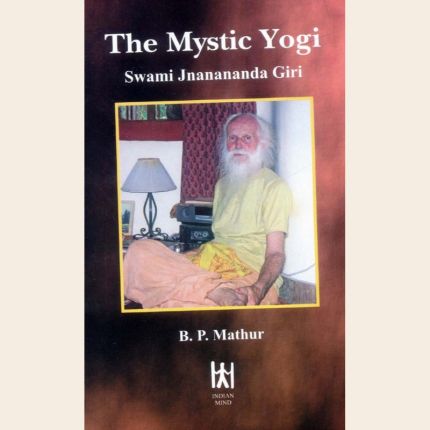
The Mystic Yogi
This book relates the extraordinary story of a Swiss youth who trekked to India in search of divine, his wanderings all over the country and his transcendental journey of becoming a sannyasi. His fascinating life, portrays his meetings with great saints and seers, wanderings in Himalayas and intense sadhana towards attainment of self-relaisation. Swami Jnanananda who embraced India as his permanent home and became a true repository of her ancient wisdom, in this book gives perennial message to provide succour and support to an ailing humanity.

The Natya Sastra of Bharatamuni

The Natyasastra
The Natyasastra is probably one of the earliest and certainly one of the best treatises on Indian Dramaturgy. At the same time, the book available now is not an early one but may be as late as the seventh or eighth century AD. The authorship is traditionally ascribed to Bharata, the sage.
The eminence of Natyasastra is not that it was the first book on the subject but that it was the first comprehensive treatise on Dance, Drama and Music.

The Oracle of Rama
Oracles are always popular because we are all interested in our destiny and the meaning of our lives. Particularly we want to know the future, which is always mysterious and uncertain. The proliferation of various New Age oracles, the multiplicity of Tarot cards, and the enduring interest in the I Ching are modern proof of this.

The Origin of Raga
An attempt has been made to trace out the most popular and common term 'raga', its origin, techniques and also the course of its development from the Vedic period to this modern age of science. It also narrates raga in actual forms and its development through ancient and medieval times and as it is practised and performed by musicians of the present times. The style of expression is easy to understand and didactic.
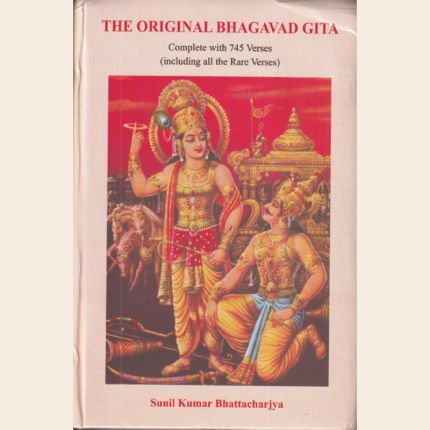
The Original Bhagavad Gita
The Original Bhagavad Gita contains the rare verses and the total number of verses in it is 745, which is in conformity with the Gitamana verse of the Bhishma parva of the Mahabharata. A millennium ago Abhinavagupta included some rare verses in his commentary on the Bhagavad Gita. The Kashmiri version of the Bhagavad Gita brought out by Schraeder in the early last century contained rare verses.
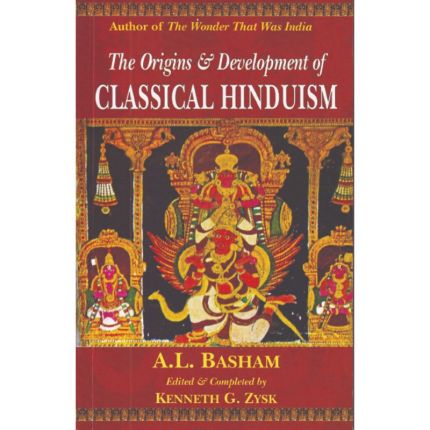
The Origins & Development of Classical Hinduism
The late A. L. Basham was one of the world's foremost authorities on ancient Indian culture and religion. Modelled on his monumental work The wonder that was india, this account of the origins and development of classical Hinduism represents a life time of reflection on the subject, and offers an intriguing introduction to one of richest of all Asian traditions.The Origins of Classical Hinduism clarifies much of Hinduism's enduring mystique. Offering an especially helpful bibliography, numerous illustrations of Hidu art never before published, and a lucid, accessible style, this book is much reading for anyone who has ever been intrigued by this fascinating religion.