


Default

Thug or a Million Murders
Thug or a Million Murders is the history of the ancient practice of murdering pilgrims and the their goods which was especially prevalent in north India. Though the practice of robbing pilgrims was common the world over and the Christian and Muslim pilgrims both faced this problem it appears to have been more organised and even to some extent ritualistic in the central Indian plains.

The Story of Indian Music and Its Instruments

The Doctrine of Vibration
This book is significant from four points of view. First, it breaks new ground in Indian philosophy. According to the Spanda Doctrine, the self is not simply witnessing consciousness as maintained by Sankya and Vedanta, but is an active force. Second, the ultimate reality is not simply a logical system of abstract categories, but is living, pulsating energy, the source of all manifestation.
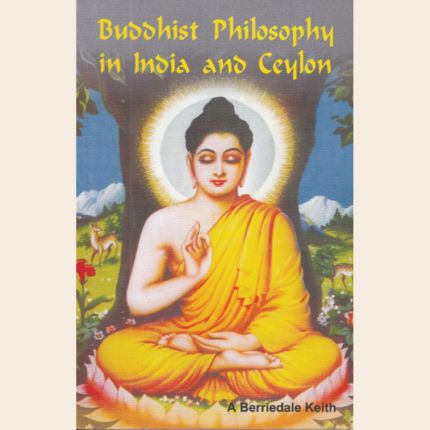
Buddhist Philosophy in India and Ceylon
This work attempts to dispel many misconceptions about the origin and development of Buddhist thought and philosophical systems. The approach adopted by the author steers clear of the customary attempts which try to assess the measure in which Buddhism, in the course of its development, attains conceptions familiar in the modern thought

History of the Sakta Religion

The Ritual of Battle
This book is a study of India's great epic, the Mahabharata, against the background of Indo-European myth, epic and ritual. It builds upon the pioneering studies in these ares by Georges Dumezil and Stig Wikander to work toward the goal of understanding how this epic's Indo-European heritage is interpreted and reshaped within the setting of bhakti or devotional Hinduism.

The Adhyatma Ramayana
The Adhyatma Ramayana is a canonical book of the Vaishnavas and is a part of the Brahmanda Purana. It is very highly respected by all classes of Hindus for the beauty of its language, its flow of verse, its clear statement of the doctrines of the Vedanta, and like the Bhagavada Gita, for its combination of the path of devotion with that of Knowledge.

The Ramayan of Tulsidas
The Ramayan, one of the most celebrated epics of the world, recounts the story of Rama, son of the King of Ayodhya, and their to the throne, who is banished from his home through the intrigues of his stepmother. Prince Rama, with his brother and his devoted wife Sita, spends fourteen years in exile. One day Sita disappears, abducted by a wicked demon named Ravana. Rama is despondent. After fruitless searching to find her whereabouts, he turns to a tribe of monkeys for help.

Mahabharata
The Mahabharata is an Indian epic, in its original Sanskrit probably the largest ever composed. Combined with the Ramayana, it embodies the essence of the Indian cultural heritage...an absorbing tale of a feud between two branches of a single Indian ruling family that culminates in a vast, cataclysmic battle....has retold the story so that the modern reader will not be discouraged from knowing and loving the stories as he did himself.

The Mahabharata and Greek Mythology
The few thousand-year-old history of the human race, just as the much shorter history of urban societies and the written tradition, is a story of encounters, of exchanges, and the formation, alteration and disappearance of those specific groupings of people and their legacies which we call cultures or societies. Progress is the fruit of our capacity to create, to work together, to accept and reinterpret all that has been discovered and all that has been learned.

The Hidden Wisdom of the Goddess
The hidden Wisdom of the Goddess is an extended meditation in the form of a novel that follows the Devimahatmya's basic outline, condensed here and expanded there in freely imaginative ways. In the Devimahatmya the seer Medhas teaches through the language of myth, which cries out for interpretation, because little is spelled out.
