


Default

The Sankhya Aphorisms of Kapila
The present translation of Aphorisms of Kapila by J.R. Ballantyne is so rendered as to make it possible for an average reader to understand the complex thought structure of Sankhya philosophy in a language that is easy and graspable. It will be of great help to those who are desirous of knowing not only the historical background of Indian thought, but also want to know as to how existential questions of life and death have been tackled.
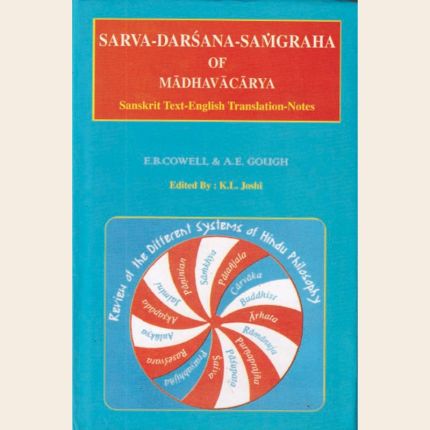
Sarva-Darsana-Samgraha of Madhavacarya

The Tarkabhasa of Kesavamisra
Tarkabhasa, a text, presents a detail discussion on Nyaya theory. It is known as an elementary treatise, a key for the beginners of the Science of Nyaya. It is quiet evident that Tarkabhasa is written by Kesava Misra, as mentioned at the end of the text. It presents the subject matter in an easy language.

The Gitagovinda of Jayadeva
It desscribes the loves of Krsna and Radha in twelve cantos containing twenty-four songs. The songs are sung by Krsna or Radha or by Radha's mind and are connected by brief narrative or descriptive passages. The appropriate musical mode and rhythm for each song are noted in the text. This poem is really a kind of drama, of the ragakavya type, since it is usually acted.

The Oracle of Rama
Oracles are always popular because we are all interested in our destiny and the meaning of our lives. Particularly we want to know the future, which is always mysterious and uncertain. The proliferation of various New Age oracles, the multiplicity of Tarot cards, and the enduring interest in the I Ching are modern proof of this.
Decolonizing Indian Studies
The present Indian academic self-understanding of its history and culture is largely Western in origin. This Western intellectual enterprise, however, went hand in hand with a Western political enterprise, i.e the colonzation of India. This raises the question : To what extent, if any, did the two developments influence each other ? It also raises another question : To what extent did West's cultural presuppositions influence its understanding of Indian civilization.

Navya-Nyaya Philosophy of Language
This book represents the philosophy of language in Navya-Nyaya, based upon an analysis of the ''Verbal Suffix Chapter'' of Gangesa's Tattvacintamani. Since this chapter elaborates what kind of verbal understanding is generated and discusses related issues, the book demonstrates the main features of that philosophy of language and serves as a good introduction to that. The analysis mainly deals with Gangesa, but in some cases it referes to Raghunatha. Since the book is an attempt to pursue philological exactness and philosophical analysis, it is hoped to interest not only Sanskrit scholars, but also philosophers in general.

Life and Teachings of Adi Sankaracarya
This book is intended for scholars, students and general readers. Accordingly, the early researches on the date and works of Sankara have been brought out in detail. Not only Sankara's commentaries on the Upanisads, Bhagavad Gita and the Brahma Sutra but also the books attributed to him, especially the minor works (prakarana granthas) and hymns (stotras), have been narrated purposefully for the sake of students and general readers.


Digestion and Metabolism in Ayurveda

The Philosophy of the Bhagavadgita
This scholarly work presents a comprehensive and authentic exposition of the philosophy of the Bhagavadgita enshrined in the original text by according due consideration to the commentaries of Samkara, Ramanuja and Madhva. In the first part of the book, Dr. Chari makes an indepth study of the selected verses from each adhyaya and discusses their philosophical implications with particular reference to the Vedanta doctrines and connected issues advanced by the commentators while interpreting the crucial verses.

The Shiva-Sutra Vimarsini of Ksemaraja
The Shiva Sutras is a manual of Yoga. It is divided into three Unmesas, each treating of one particular means, Upaya, for reaching independence Svacchanda. The first is the Shambhavopaya, the specific Shaiva discipline and corresponds to the Jnanamarga of the Vedantins, and what is called in the Bhagvad Gita, The Jnanayoga of the Sankhyas,also the avyaktagatih. The second, the Shaktopaya is the same as Shakta discipline and consists in the use of mantras and attainment of knowledge by their means. The third called the Anavopaya is the Astanga Yoga of Patanjali. The three Upayas are treated in the order of their worth; the Shambhava being the first and most excellent, and the Anava being the least worthy and not recognized by Vasugupta in his Spandakarika.