


Default

Transcendent Journey
TSwami Jnanananda Giri (1929–2015) was born in Zürich/Switzerland. He went to India at the age of twenty-two and joined in 1956 the ancient order of sannyasis (renunciates) who devote their lives to yoga, meditation and self-realization.
Swami Jnanananda never left India again. After his guru passed away he led the life of a wandering mendicant. Relying on God alone he travelled far and wide through India, particularly to the ancient places of pilgrimage and to many less known holy sites. His life was rich in encounters with saints, yogis and healers of manifold denominations. This life story he narrates in this book.
Gradually he became a guru himself and gathered a small group of disciples around him. He finally settled in the outskirts of the Himalayan hill station Mussoorie and lived in a tiny hut in the forest. For the last decade of his life this daily rhythm continued in Dehradun at the foot of the Himalayas, in his disciple Maitreyi’s house.
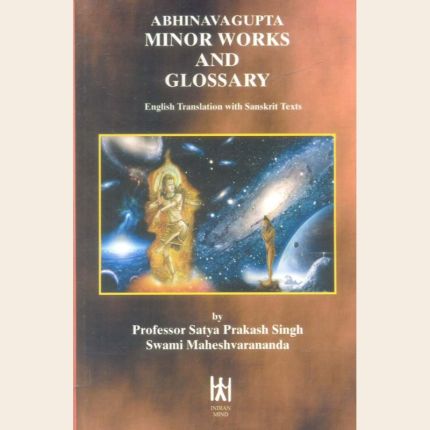
Abhinavagupta Minor Works and Glossary (PB)

Maheshvarananda The Mahartha Manjari (PB)
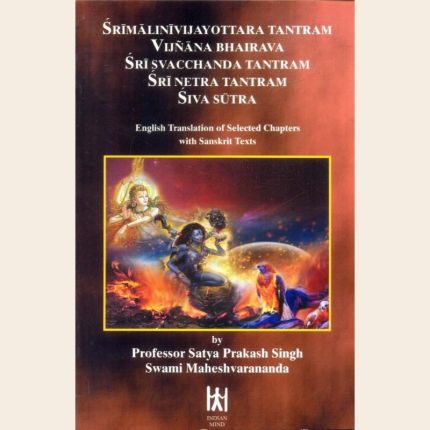
Srimalinivijayottara Tantram, Vijnana Bhairava, Sri Svacchanda Tantram, Sri Netra Tantram, Siva Sutra

श्री रमण महर्षि का उपदेश (HB)

The Ritual of Battle
This book is a study of India's great epic, the Mahabharata, against the background of Indo-European myth, epic and ritual. It builds upon the pioneering studies in these ares by Georges Dumezil and Stig Wikander to work toward the goal of understanding how this epic's Indo-European heritage is interpreted and reshaped within the setting of bhakti or devotional Hinduism.

Sivastotravali of Utpaladeva
Sivastotravali is a collection of hymns dedicated to Lord Siva by Acarya Utpaladeva, a great Saivite master intensely in love with Lord Siva and earnestly craving to be one with Him. The book comprises 450 verses arranged in twenty chapters. Each verse is soaked in the nectar of his intense devotion for the Lord and extreme craving for God-consciousness. The book represents his direct and uninhibited one-way dialogue with Lord Siva, projecting his problems, one at a time and seeking His indulgence in getting over these.

SI-YU-KI
The reader who looks into the pages of this book will find ample material for study on some important questions; the different manners and customs of separate people, the various products of the different soils and the diverse class divisions of the society; when Buddhism flourished and when Buddhism declined as also how the devoted pilgrims encountered the perils of travel in foreign and distant lands and endured sufferings by desert, mountain and sea.

The Indian Craftsman
This book The Indian Craftsman, by Ananda K. Coomaraswamy is a study of the second type of genius, the Indian Craftsman. The author has treated his subject from three points of view : the village, the town and the palace or temple, i.e. where the craftsman lived, worked and had their patrons. He has also minutely examined how the caste system, religion and the guild set up standards of quality and enforced their strict adherence.

The Vibrating Universe
The Vibrating Universe synthesizes the superstring theory of modern physics and the vibration concept of Advaita Vedanta and Kashmiri Saivism. The Philosophical problem of monism versus pluralism, as given in Indian philosophy, Western philosophy and classical as well as modern science, has been analytically presented. In this attempt, dualism and pluralism have been rejected, and non-dualism has been re-established.

Ramayana
'' To say Ramayana is one of the great epics of India may be a misleading understatement, for it is of far greater importance to India than the Greek epics are to Western thought....Buck has succceeded better than anyone elese in conveying the spirit of the original. '' ''For the purposes of the general reader, the biik is flawless: a marvelous tale, told with allan the elan of a Tolkein, charmingly but unobtrusively illustrated, and with an introduction by a prominent Sanskritist. ''