


Buddhism

Personal Salvation and Filial Piety
Personal Salvation and Filial Piety offers a complete and fully annotated translation of The Precious Scroll of Incense Mountain, based on a nineteenth-century edition. The translation is preceded by substantial introduction that discusses the origin of the text and the genre to which it belongs and highlights the similarities and differences between the scroll and female saints' lives from medieval Europe.

The Cult of Nothingness

Print and Power
Print and Power begins with an overview of Vietnam's lively public spheres, bringing debates from Europe and the rest of Asia to Vietnamese society as well as Vietnamese society as well as Vietnamese and East Asian understandings of public discourse and public space. Popular taste, rather than revolutionary or national ideology, determined to a large extent what was published, with limited intervention by the French authorities.

Riven by Lust
Riven by Lust explore the tale of a man accused of causing the fundamental schism in early Indian Buddhism, but not before he was sex with his mother and kills his father. In tracing this Indian Buddhist Oedipal tale, Jonathan Silk follows it through texts in all of the major canonical languages of Buddhism, Sanskrit, Pali, Tibetan, Chinese, and Japanese, along the way noting parallels and contrasts with classical and medieval European stories such as the legend of the Oedipal Judas.

The Lotus and The Lion
Buddhism is indisputably gaining prominence in the West, as is evidenced by the growth of Buddhist practice within many traditions and keen interest in meditation and mindfulness. In The Lotus and the Lion, the author traces the historical and cultural origins of Western Buddhism, showing that the British Empire was a primary engine for curiosity about and then engagement with the Buddhisms that the British encountered in India and elsewhere in Asia.
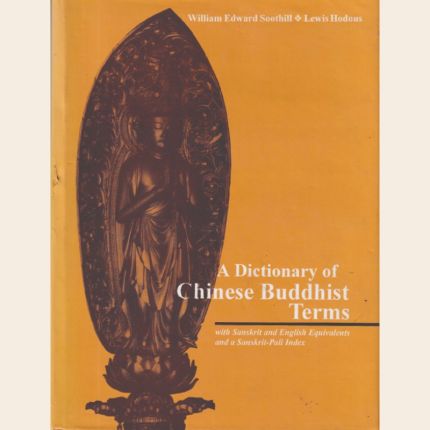
A Dictionary of Chinese Buddhist Terms
After the Dictionary went to press, Professor Soothill died. The work on the Dictionary, however, was completed. For ten years we worked together, he at Oxford and I at Hartfold, and the manuscript crossed the Atlantic four times. During his semester in New York as Visiting Professor in Columbia University and on my brief visit to Oxford, we had opportunity to consult together on some outstanding problems. The work of organizing the material and harmonizing the differences was done by Professor Soothill. He was well eequipped to undertake the task of producing a Buddhist Dictionary, having a thorough knowledge of the Chinese language.

Buddhism
This book by a renowned Pali scholar is of great academic worth as it expounds the seminal ideas, key concepts and basic theories of Buddhist thought pertaining to dhamma and abhidhamma. It is a well thiught out work based on wide study and deep thinking of the concerned literature. It touches the kernel of Buddhist ethics and philosophy. According to Indian culture cosmic process and humanlife is teleological, purposive and goal-oriented.

SI-YU-KI
The reader who looks into the pages of this book will find ample material for study on some important questions; the different manners and customs of separate people, the various products of the different soils and the diverse class divisions of the society; when Buddhism flourished and when Buddhism declined as also how the devoted pilgrims encountered the perils of travel in foreign and distant lands and endured sufferings by desert, mountain and sea.

The Religion of India
Max Weber's early twentieth-century study of the religions and civilization of India is a great pioneering adventure in the sociology of ancient India. Weber's insight and analysis-especially his application of the sociological perspective to the work of classical Indologists and the religious texts available to him-were to add much to the store of the social scientist. Later, historians and archaeologist were to confirm a surprising number of Weber's theories.
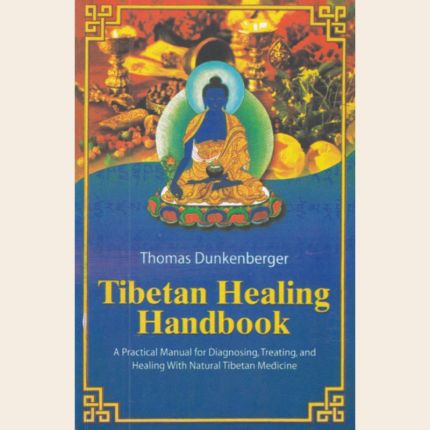
Tibetan Healing Handbook
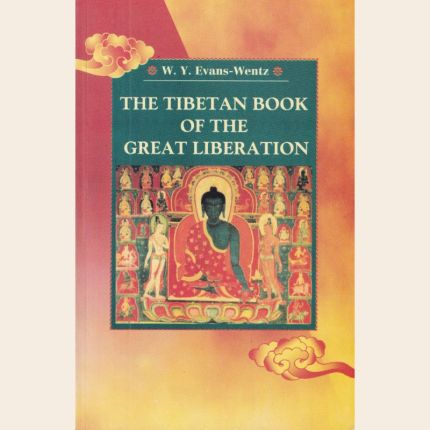
The Tibetan Book of the Great Liberation
