


Archaeology


Man and His Becoming
₹450Richard C. Nicholson’s translation of Rene Guenon’s Man and His Becoming is an exposition of the ‘nature and constitution of the human being’ in the light of the doctrines of Vedanta which echoes the Upanishadic message, ‘there is one only without a second.’ Other traditional views like Nyaya, Vaisesika, Sankhya, Yoga and Mimamsa are referred to wherever necessary.

Perspectives in Social and Economic History of Early India
₹495The book begins with a survey of the sources of the social and economic history of early India, and reviews the writings from the late ninteenth to the mid-twentieth centuries on social history. It discusses the problems of caste and gender relations, and shows the role of divination and communication in fostering social control and cohesion.

Perspectives on The Origin of Indian Civilization
₹700The earliest Indian inscriptions date from the third century before Christ. Archaeological and palaeo-anthropological evidence, as well as the Indian oral tradition, consistently point to the ‘continuity’ of the Indian Civilization back to a much earlier date. However, the question of the origin of Indian Civilization prior to that period remains open. There are three main schools of thought in this regard.


The Rhythm of History
₹195Arthur Osborne found that while academics investigated the causes of historical incidents, their research was limited, for the most part, to obvious physical causes, but they failed to clarify the overarching but hidden principles that, in his eyes, governed actions and made history. In this book he suggests a different approach to history, giving its due importance to spiritual ideas and teachers, and proposing that ideas shape the physical conditions of society more than the other way round. In his own words: “The purpose of the present book is not so much to suggest any new philosophy or interpretation of history as to draw attention to a rhythm that runs through it, establishing parallels and coincidences large and obvious enough not to be open to dispute. These will be sufficient at least to show that history is not purely haphazard and yet is also not simple progress.”
Arthur Osborne observed that so-called progress was not what it appeared to be and that modern civilisation is not necessarily an advance on the discoveries and understanding that ancient civilisations had garnered and demonstrated in their development. He outlined the parallels–not be confused with uniformity–in the different phases through which the great civilizations of mankind passed. In the 18th century there was a radical divergence between the West and East, which is being overcome by the surging of a single world civilization.
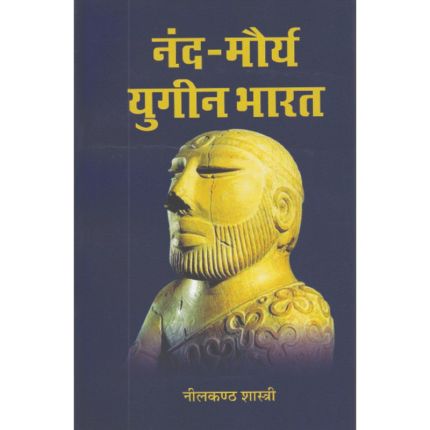
नंद -मौर्य युगीन भारत
₹595प्रस्तुत पुस्तक अंग्रेजी भाषा में लिखित “ऐज ऑफ़ दि नन्दाज एंड मौर्याज ” का हिंदी रूपांतरण है. मूल पुस्तक के संपादक प्रसिद्ध इतिहासवेत्ता आचार्य श्री नीलकंठ शास्त्री है जिन्होंने संपादन-कार्य के साथ-साथ इस ग्रन्थ के पांच अध्याय भी लिखे है. अन्य अध्यायों की रचना में सर्वश्री हेमचन्द्रराय चौधरी, जितेन्द्रनाथ बनर्जी, उपेन्द्रनाथ घोषाल, प्रबोधचंद्र बाग्ची , सुनिटिकुमार चटर्जी, वी राघवन, निहाररंजन रॉय इन आचार्यों के योगदान मिलता है.