


Motilal Banarsidass Publishers Pvt. Ltd.


The Ritual of Battle
This book is a study of India's great epic, the Mahabharata, against the background of Indo-European myth, epic and ritual. It builds upon the pioneering studies in these ares by Georges Dumezil and Stig Wikander to work toward the goal of understanding how this epic's Indo-European heritage is interpreted and reshaped within the setting of bhakti or devotional Hinduism.

Mahabharata
The Mahabharata is an Indian epic, in its original Sanskrit probably the largest ever composed. Combined with the Ramayana, it embodies the essence of the Indian cultural heritage...an absorbing tale of a feud between two branches of a single Indian ruling family that culminates in a vast, cataclysmic battle....has retold the story so that the modern reader will not be discouraged from knowing and loving the stories as he did himself.

The Mahabharata and Greek Mythology
The few thousand-year-old history of the human race, just as the much shorter history of urban societies and the written tradition, is a story of encounters, of exchanges, and the formation, alteration and disappearance of those specific groupings of people and their legacies which we call cultures or societies. Progress is the fruit of our capacity to create, to work together, to accept and reinterpret all that has been discovered and all that has been learned.

The Hidden Wisdom of the Goddess
The hidden Wisdom of the Goddess is an extended meditation in the form of a novel that follows the Devimahatmya's basic outline, condensed here and expanded there in freely imaginative ways. In the Devimahatmya the seer Medhas teaches through the language of myth, which cries out for interpretation, because little is spelled out.

Dancing with Siva

Astavakragita
This contemporary companion to the Bhagavad Gita addresses the heart of human yearning. It offers the possibility of transforming the battle of life into a path to Truth, a living process. Each chapter presents a road toward our inner, universal Self, bringing a deeper and wider perspective along the way.
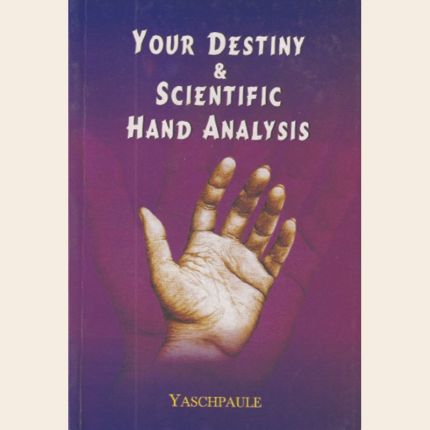
Your Destiny & Scientific Hand Analysis
In Your Destiny and Scientific Hand Analysis, Yaschpaule analyses and discusses the relationship between the lines on the hand and their possible significance in a person's life. The author explains to the reader what the lines and marks on his palms may tell him about the subject. He does not predict miracles or disasters in this book.

How to Judge A Horoscope (Volume One)
Prasna Marga is an exhaustive treatise on the various aspects of predictive astrology of immense practical utility. The work can be considered as of exceptional interest and value. The author, a Nambudari Brahmin of Kerala who wrote this book in 1650 A.D. was a renowned scholar and has culled valuable information from a number of ancient sources.
How to Judge A Horoscope (Volume 2)
In this book, I am not going to make a case for astrology. The introduction I have given to my Astrology for beginners and my Astrology and Modern Thought should be eye-openers to the greatest sceptic, that astrology is science and no superstition. It is an interplanetary or cosmic science that deals with the play of cosmic energy.

Solve Your Problems Astrologically
A unique publication on Hindu astrology which exposes everyday human problems like education, sex, marriage, job, finance, ill-health and death in the most revealing manner. If you have a problem, the book will dissolve it and disclose interesting features of your life. Those interested in practical side of yoga, meditation and rational approach to life will be taken to unprecedented heights of cosmic unfoldment.

The Dictionary of Hindustani Classical Music
The growing interest of the Western, especially the English-speaking nations towards the North Indian Classical Music is more evident now than ever before. It is no doubt a sign for us to be happy about; at the same time it causes us deep concern whenever we try to appreciate the great responsibility that has devolved upon us in presenting the correct interpretation of musical terms of the ancient Sanskrit Sastras.