


Motilal Banarsidass Publishers Private Limited

Contemporary Indian Philosophy
The present study seeks to highlight these aspects of Contemporary Indian Philosophy. It is an attempt to re-think, in an academic manner, the thoughts of the contemporary thinkers, Swami Vivekananda, Mahatma Gandhi, Rabindranath Tagore, Sri Aurobindo, Krishna Chandra Bhattacharya, S. Radhakrishnan, and Mohammad Iqbal. Different aspects of their thoughts have been systematised, categorised and placed under suitable philosophical heads in this work.
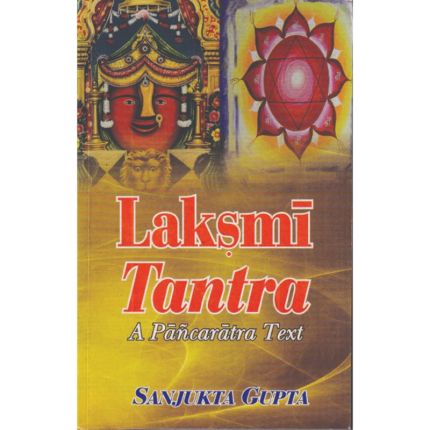
Laksmi Tantra
Amongst the vast number of Pancaratra Agamas, the Laksmi Tantra stands out because of its almost exclusive treatment of the Visnuit mother-goddess Laksmi, the Sakti of Visnu-Narayana. The text not only glorifies Laksmi, but also women in general as beings created in the cherished form of Laksmi, and it advocates their worship.

The Sakta Pithas
The sakta pithas by Dr D. C. Sircar, which is limited and precise in scope but has a wide appeal, brings honour to the young historian of Calcutta. Its basis is a critical edition of the Pithanimaya or Mahapithanirupana which is short treatise of the late period describing the fiftyone pilgrim spots associated with the Mother Goddess under some of her various names. Each one of the pithas is mentioned along with a particular form of the Goddess and that of siva associated with it.

The Tyagaraja Cult in Tamilnadu
Tyagaraja is a Somaskanda and the first visual representation of this composite deity can be traced to the time of pallava rule. The concept of Somaskanda is unique to Tamilnadu. The Cola monarchs were devotees of Tyagaraja. The book analyses the Tyagaraja Cult from three perspectives: as a religious synthesiser, socio-cultural integrator and legitimiser of the ideologies of the State.

The Sacred Marriage of A Hindu Goddess
Moving beyond traditional understanding of the catagory of ''sacred marriage'' derived from studies of the ancient Near East, Harman reveals that sacred marriage in India functions as a devotional metaphor for Hindu devotees, a way understanding how deities act toward one another and toward who worship them. Combining sdystematic textual study with descriptive fieldwork, Harman offers us an original and perceptive exploration of the relationship between the human and the divine in Hindu life.

History of Anncient India
The object of this volume is to provide within a moderate compass a compendious account of the history, institutions, and culture of ancient India from the dim ages of antiquity to the establishment of Moslem rule. It has not been planned to meet the needs of any particular class of readers. Its primary purpose is to serve alike students, scholars, and all others, interested in the study of ancient Indian history, as a book of ready use and reference.