


Tantra
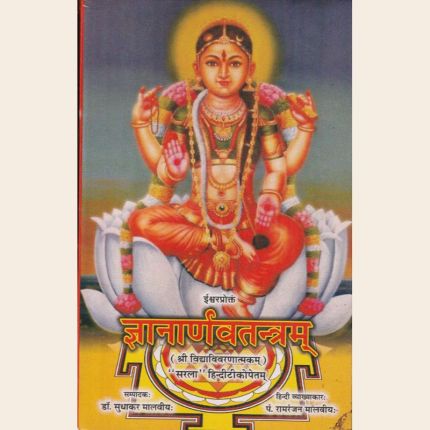
ज्ञानार्णवतंत्रम
ज्ञानार्णव तंत्र का प्रस्तुत संस्करण श्रीविद्या के उपासकों के समक्ष इदं प्रथमतया हिंदी के साथ प्रस्तुत है. प्रस्तुत संस्करण का मूल आनंदाश्रम के मुद्रित मूल पर आधारित है तथा अनेक स्थानों पर पाठों को मंत्रमहोदधि अदि अन्य ग्रंथों से मिलकर शुद्ध किया गया है. श्रीविद-विषयक अनेक ग्रन्थ सम्प्रदायानुसार प्राप्त होते हैं. इनके एक विवेचन आवश्यक है.

The Shiva-Sutra Vimarsini of Ksemaraja
The Shiva Sutras is a manual of Yoga. It is divided into three Unmesas, each treating of one particular means, Upaya, for reaching independence Svacchanda. The first is the Shambhavopaya, the specific Shaiva discipline and corresponds to the Jnanamarga of the Vedantins, and what is called in the Bhagvad Gita, The Jnanayoga of the Sankhyas,also the avyaktagatih. The second, the Shaktopaya is the same as Shakta discipline and consists in the use of mantras and attainment of knowledge by their means. The third called the Anavopaya is the Astanga Yoga of Patanjali. The three Upayas are treated in the order of their worth; the Shambhava being the first and most excellent, and the Anava being the least worthy and not recognized by Vasugupta in his Spandakarika.

Shree Sukta

Tantra Mantra Yantra


The Spanda-Karikas with the Spanda-Nirnaya
The Spanda system owes its origin to Shivasutras and concerns itself with their elucidation and popularisation. The name of the commentary written by Ksemaraja is Spandanirnaya. It was undertaken at the request of his own pupil Sura. The present book contains translations of the Sutras of the Spandakarikas and Spandanirnaya.

From Early Vedanta to Kashmir Shaivism

An Introduction to the Philosophy of Trika Saivism
The aim of this book is basically to introduce the reader to the fundamental principles that Trika philosophers have enunciated in their philosophical-cum-theological treatises. Such an approach has been adopted deliberately on account of the fact that Trika system of thought, which is very rich in philosophical vocabulary, is hardly known to general public in the manner of Advaita Vedanta of Samkara.

The Doctrine of Vibration
This book is significant from four points of view. First, it breaks new ground in Indian philosophy. According to the Spanda Doctrine, the self is not simply witnessing consciousness as maintained by Sankya and Vedanta, but is an active force. Second, the ultimate reality is not simply a logical system of abstract categories, but is living, pulsating energy, the source of all manifestation.

काश्मीर शिवाद्वयवाद की मूल अवधारणाएं
आगमिक संस्कृति के सारभूत काश्मीर शिवाद्वयवादी जीवन-दर्शन के प्रति विद्यानों की अनुदिन बढ़ती हुई प्रवृत्ति के बावजूद इस सम्प्रदाय की दार्शनिक, पद्यात्मक/अवधानात्मक और अनुष्ठानात्मक संरचना पर अब तक जो काम हुआ है वह बहुमूल्य होने पर भी अत्यल्प है. इस सन्दर्भा में गंभीर गवेषणा को आगे बढ़ाने के क्रम में यह ग्रन्थ एक प्रारंभिक प्रयास है जिसमें कश्मीर शिवाद्वयवाद के मौलिक चिंतनक्रम में अनुस्यूत आधारभूत विशिष्टा प्रत्ययों को रूपायित कर उनके उन्मीलन से इस सम्प्रदाय में एक अंतर्दृष्टि विक्सित करने की चेष्टा की गयी है.

The Theory and Practice of Mantra
The contents of this book focus on the evolution and practice of mantra. This work consists of five chapters. The second and third chapters discuss the historical speculation of mantra and the purpose of mantric practice and its practical aspect in Brahmanic and Buddhist traditions respectively. The fourth chapter draws out the basic theory of mantric practice, and clarifies the role of mantra and Esoteric Buddhism.
