


Indian Philosophy

Saundaryalahari of Sankaracarya
The Saundaryalahari has fascinated and puzzled generations of scholars and laypersons; subject to continuing study and debate, till today, such details as the authorship of the 100 verses named the Saundaryalahari remain a matter of contention, particularly among scholars.
Nataraja Guru worked on the translation and commentary of the Saundaryalahari for a period of three and a half years, it is his last work and comes at the end of a life dedicated to the pursuit of the Absolute and those familiar with his work will recognize in it a kind of summing up of his life and teachings.

The Philosophy of the Bhagavadgita
This scholarly work presents a comprehensive and authentic exposition of the philosophy of the Bhagavadgita enshrined in the original text by according due consideration to the commentaries of Samkara, Ramanuja and Madhva. In the first part of the book, Dr. Chari makes an indepth study of the selected verses from each adhyaya and discusses their philosophical implications with particular reference to the Vedanta doctrines and connected issues advanced by the commentators while interpreting the crucial verses.
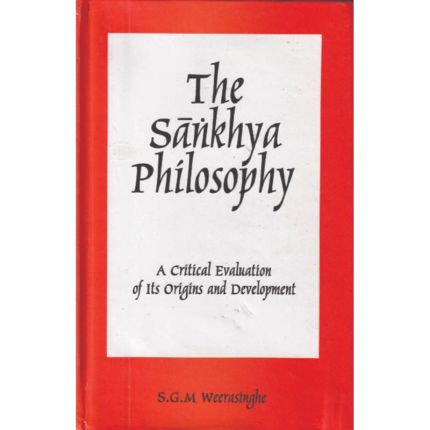
The Sankhya Philosophy

From Vasubandhu to Caitanya
The chapters in this volume are a selection of papers presented in the general Philosophy Section at the 12th World Sanskrit Conference in Helsinki, Finland. The first part of the book, Studies in Indian Philosophy, contains nine studies on individual topics and concepts in Indian philosophy from various perspectives: historical-philological, philosophical and comparative.

Indian Philosophical Systems
Vedanta Desika, an illustrious successor to Ramanuja, wrote two important philosophical treatises titled Tattva-mukta-kalapa and Adhikarana-saravati, devoted primarily to establish that Visistadvaita Vedantais a sound system of philosophy. He also contributed another important philosophical work under the title Paramata-bhanga in which he presents a critical review of the main tenets of sixteen schools of thought covering.
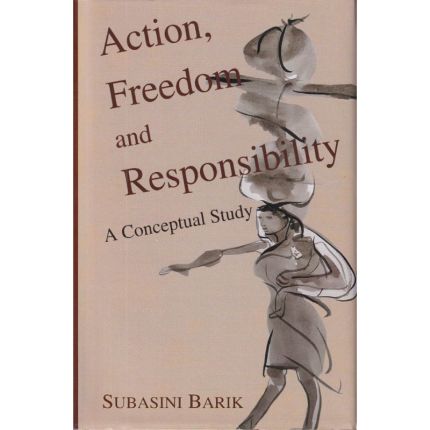
Action Freedom and Responsibility
This book, a work on human doing, analyses and applies three central aspects of human life - Action, Freedom and Responsibility - in the wide spectrum of the Philosophy of Mind. Reflections on these issues and their interconnections have a significant effect on the Philosophy of Value and application of ethical theories in practical life.

Theories of Knowledge

Ethics and Culture
The present volume of Ethics and Culture contains six articles of renowned teachers of philosophy who are also the members of the value Group, Centre of advanced study in philosophy, Jadavpur University. In all these articles authors have explored the contributions of the great thinkers of the modern India regarding the value system of our country. Here the perspectives of Bankim Chandra Chattopadhyay, Bal Gangadhar Tilak, Dwijendranath Tagore, Tarabai Shinde, J.N. Mohanty and Sri Ramakrishna Paramahamsa have been discussed in detail as all of them have a distinct view and faith on the traditional cultural beliefs of India and also have taken a critical approach to judge the mundane, orthodox attitude of people.

Advaitic Mysticism Of Sankara
This book attempts to elaborate and clarify Sankara's understanding of brahmannubhava, in all its aspects, relying exclusively on his own writings. For this, not only the commentaries, but also the prakarana granthas have been taken into account. In the final chapter, brahmanubhava is compared with what was said about the mystic experience by two of the most authoritative exponents of christian and Islamic mysticisms, namely st, John of the cross and Jalalu' d-Din Rumi, mainly to understand Sankara's position without any ambiguity.

Fundamentals of Indian Philosophy
Indian philosophy reflects some of the earliest thought-traditions in human history. Its foundations can be traced to ancient minds and their capacity for insatiable curiosity and constant meditation. The Indian thinkers of old aimed their pragmatic philosophies at not just the satisfaction of intellectual curiosity or pursuit of theoretical truths but actually the assimilation of intellectually discerned and established truths into one's own personality for a life of freedom and enlightenment. This is true of modern Indian philosophers, like Sri Aurobindo and Dr. Radhakrishnan, as well. Fundamentals of Indian Philosophy reflects the vastness and richness of this philosophic tradition in a comprehensive and all-embracing yet compact presentation that lays bare the essentials of Indian philosophy.

Six Vedic Systems of Indian Philosophy
This book professes to be no more than a description of some of the salient points of each of the six systems of Indian philosophy. It does not claim to be exhaustive. It is calculated to appeal to the beginners and to arouse their curiosity in the subject. I hope that this presentation of the fundamental tenents of the six systems of Indian philosophy will be superseded by a more comprehensive examination of Indian philosophy.
