


Default

Dara Shikuh
Indian tradition remembers Dara Shikuh not so much as an emperor's son, but as a mystic philosopher. The great dream of his life-a dream shattered by his untimely death-was the brotherhood of all faiths and the unity of mankind. After him the vision of unity was lost in the atmosphere of hatred and rivalry created by the warring sects and religious schools, and even today we are living in the age of religious disintegration.
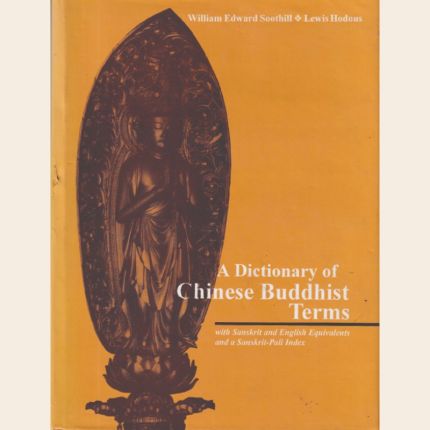
A Dictionary of Chinese Buddhist Terms
After the Dictionary went to press, Professor Soothill died. The work on the Dictionary, however, was completed. For ten years we worked together, he at Oxford and I at Hartfold, and the manuscript crossed the Atlantic four times. During his semester in New York as Visiting Professor in Columbia University and on my brief visit to Oxford, we had opportunity to consult together on some outstanding problems. The work of organizing the material and harmonizing the differences was done by Professor Soothill. He was well eequipped to undertake the task of producing a Buddhist Dictionary, having a thorough knowledge of the Chinese language.

Babur-Nama
The book in two volumes is a translation of Babur Padshah's Autobiography, made from the original Turki text. It truly embodies the career of the founder of the Mughal empire in India. It has the rare distinction of being contemporary with the events it describes. Babur-Nama has the complete record of Babur's life (1493-1529), when Babur ascended the throne at the young age of eleven to September 1529 where he had established himself as a monarch.

Domain of Lord Jagannath
This little book, entitled Domain of Lord Jagannath -A Historical Study by Dr. Bikram Das, a medical professor, is a unique work in the field of cultural history relating to Lord Jagannath and the Thakur Raja of Puri. It describes how the glorious administration of the sixteenth century developed in Purushottama-dham and how the Gajapati Rajas were respected by Rajas, Zamindars and people of Orissa even after they were deprived of power and independence.

A Dictionary of Indian Mythology
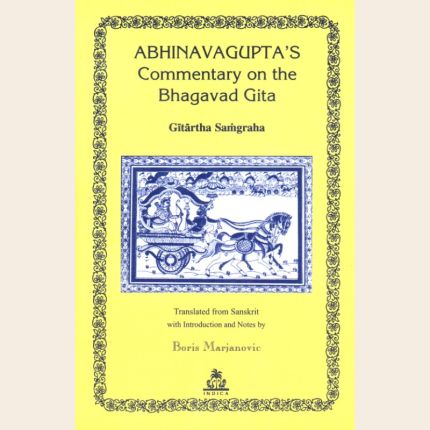
Abhinavagupta’s Commentary on the Bhagavad Gita (PB)
Abhinavagupta, probably the greatest genius of India in the fields of philosophy, aesthetics, poetics, dramaturgy, Tantra and mysticism, is being rediscovered only in the last few decades. Although several scholars, in India and abroad, are engaged in studying his works, it is surprising that there are still few translations available.
Abhinavagupta’s Commentary on the Bhagavad Gita (HB)

A Journey in the World of the Tantras

The Philosophy of the Bhagavadgita
This scholarly work presents a comprehensive and authentic exposition of the philosophy of the Bhagavadgita enshrined in the original text by according due consideration to the commentaries of Samkara, Ramanuja and Madhva. In the first part of the book, Dr. Chari makes an indepth study of the selected verses from each adhyaya and discusses their philosophical implications with particular reference to the Vedanta doctrines and connected issues advanced by the commentators while interpreting the crucial verses.

KASI THE SACRED CITY OF LORD SIVA

The Ananda-vana of Indian Art
