


Default

The Musician and His Art
In this book, the author relentlessly pursues his intellectual aims by borrowing ideas from a wide range of disciplines : sociology, linguistics, cultural anthropology, acoustics, aesthetics, demography, economics, marketing finance, psycho-analysis, mythology, philosophy and even mathematics. Despite its diverse intellectual canvas, the book retains the essential ''Indian-ness'' of the author's argument, and simultaneously addresses an international readership.

Jainism Before 650 BCE
Ancient history of India reveals that there were two parallel traditions in India, viz. Vedic and Sramanic. The Sramana Tradition includes Jainism, Buddhism and others such as the Ajivikas and Ajnanas. Jain religious tradition is one of the oldest living religions of India. Historicity of 24th Tirthankara Mahavira in sixth century BCE is well established. The Jain records mention the name of 23 tirthankaras before Mahavira. Among them Parsvanatha was the 23rd and Neminatha was the 22nd.

Idealistic Thought in Indian Philosophy
The author has attempted to show how the Idealistic thought of a primary stage reached its acme step by step.The book explains what Idealism signifies in its different shades with special reference to the Idealistic schools of Indian Philosophy and also speaks about the rise and growth of Idealistic thought from the Vedic times till the final establishment of Drsti-Srsti-Vada in the Kevaladvaita Vedanta vis-a-vis the Srsti-Drsti-Vada of the same school.

Indian Philosophical Wisdom
The title of the book Indian Philosophical Wisdom: some Glimpses itself signifies its importance. Ineed, Philosophy is involved in every sphere of human life - literature, creative art, culture, etc. The author in her zeal to unravel the precious accumulated wisdom of Indian Philosophy delved in its treasure with different approaches - historical, analytical, comparative, etc. An attempt has been made in this book to expound Indian Philosophical systems and to analyse critically their logical implications.

Tantrasara by Abhinavagupta (PB)
Tantrasara is an extensive digest and recension of Tantraloka, a magnum opus by Acarya Abhinavaguptapada. The author himself created this digest to have a comprehensive study of the voluminous text, as this great and important text is not easy to absorb by everyone in a larger study material form. The complete text (10th century A.D.) is a compendium of all Tantrika rituals and philosophical essence of Tantra, drawn from the light of all pre-precepts on Indian Tantra till the time of the creator. This text consists of thirty seven chapters. It reflects on Tantra from the background of Kashmir Shaivism which is known as the monistic philosophy of Shaivism with the technical term Pratyabhijna. Abhinavagupta explains here in a lucid way about the ways to worship the Supreme Consciousness in order to attain this state of Absolute ecstasy and liberation in one single life of mankind. This work is before the English-speaking world for the first time in a hermeneutic way.

Saundaryalahari of Sankaracarya
The Saundaryalahari has fascinated and puzzled generations of scholars and laypersons; subject to continuing study and debate, till today, such details as the authorship of the 100 verses named the Saundaryalahari remain a matter of contention, particularly among scholars.
Nataraja Guru worked on the translation and commentary of the Saundaryalahari for a period of three and a half years, it is his last work and comes at the end of a life dedicated to the pursuit of the Absolute and those familiar with his work will recognize in it a kind of summing up of his life and teachings.

Dara Shikuh
Indian tradition remembers Dara Shikuh not so much as an emperor's son, but as a mystic philosopher. The great dream of his life-a dream shattered by his untimely death-was the brotherhood of all faiths and the unity of mankind. After him the vision of unity was lost in the atmosphere of hatred and rivalry created by the warring sects and religious schools, and even today we are living in the age of religious disintegration.
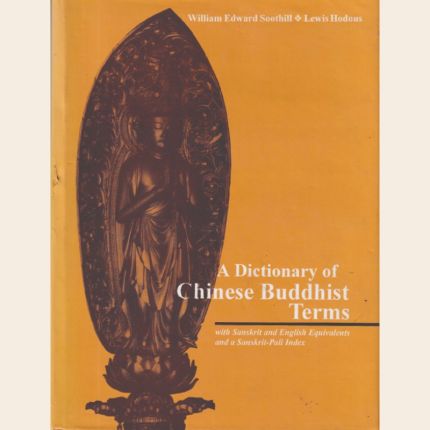
A Dictionary of Chinese Buddhist Terms
After the Dictionary went to press, Professor Soothill died. The work on the Dictionary, however, was completed. For ten years we worked together, he at Oxford and I at Hartfold, and the manuscript crossed the Atlantic four times. During his semester in New York as Visiting Professor in Columbia University and on my brief visit to Oxford, we had opportunity to consult together on some outstanding problems. The work of organizing the material and harmonizing the differences was done by Professor Soothill. He was well eequipped to undertake the task of producing a Buddhist Dictionary, having a thorough knowledge of the Chinese language.

Babur-Nama
The book in two volumes is a translation of Babur Padshah's Autobiography, made from the original Turki text. It truly embodies the career of the founder of the Mughal empire in India. It has the rare distinction of being contemporary with the events it describes. Babur-Nama has the complete record of Babur's life (1493-1529), when Babur ascended the throne at the young age of eleven to September 1529 where he had established himself as a monarch.

Domain of Lord Jagannath
This little book, entitled Domain of Lord Jagannath -A Historical Study by Dr. Bikram Das, a medical professor, is a unique work in the field of cultural history relating to Lord Jagannath and the Thakur Raja of Puri. It describes how the glorious administration of the sixteenth century developed in Purushottama-dham and how the Gajapati Rajas were respected by Rajas, Zamindars and people of Orissa even after they were deprived of power and independence.

A Dictionary of Indian Mythology
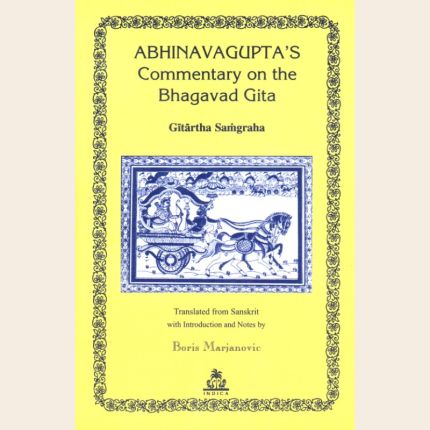
Abhinavagupta’s Commentary on the Bhagavad Gita (PB)
Abhinavagupta, probably the greatest genius of India in the fields of philosophy, aesthetics, poetics, dramaturgy, Tantra and mysticism, is being rediscovered only in the last few decades. Although several scholars, in India and abroad, are engaged in studying his works, it is surprising that there are still few translations available.