


Default

हिन्दी मंत्रमहार्णव (मिश्र खण्ड )

हिन्दी मंत्रमहार्णव (देवी खण्ड )

हिन्दी मंत्रमहार्णव (देवता खंड)
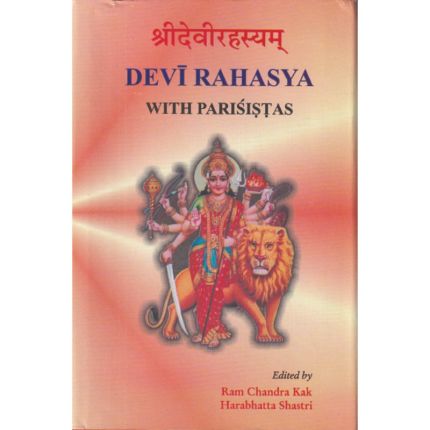
Devi Rahasya With Parisistas
The Devirahasya is traditionally supposed to form part of the bigger compilation called Rudrayamala. The Uddharakosa, though written in the form of a dialogue between Dakshinamurti and his disciple Akshobhya, is a collection of quotations from no less than fortyseven Tantric works. The Devirahasya in all its parts seemes to have been composed by some kashmirian writter because as already referred to above the goddesses Jvalamukhi, Sarika maharajni, Sarada, Bhida and Bala are popular and have their shrines in the kashmir valley.
Ancestral Voices
Gayatri
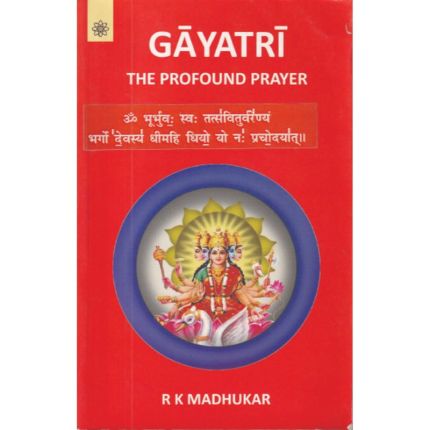
Gayatri is a sacred mahamantra. It is a universal prayer. The Vedas, Upanishads, puranas and various other ancient Hindu Scriptures sing in one voice the glory of Gayatri - the profound prayer. Since the Vedic times, Gayatri has been a daily prayer of the Hindus, chanted every morning and evening, addressed to Savitr, the power behind the Sun. Gayatri is considered the most exalted prayer, because unlike the other mantras, it does not seek material or worldly gains. It is a prayer that seeks the highest enlightement, the realization of the supreme being, which according to our sanathana Dharma, is the highest goal of every human being. Gayatri is, undoubtedly, the prayer or meditation meant for men and women everywhere, irrespective of their caste, creed, religion or nationality Om Gayatri.

Contemporary Indian Philosophy
The present study seeks to highlight these aspects of Contemporary Indian Philosophy. It is an attempt to re-think, in an academic manner, the thoughts of the contemporary thinkers, Swami Vivekananda, Mahatma Gandhi, Rabindranath Tagore, Sri Aurobindo, Krishna Chandra Bhattacharya, S. Radhakrishnan, and Mohammad Iqbal. Different aspects of their thoughts have been systematised, categorised and placed under suitable philosophical heads in this work.

Theory of Karma
The ancient Vedantic knowledge reinforced by Brahmasutra and Bhagavadgita establish that it is, purely and solidly, the result (karmaphala) of earlier actions (karmas) of each one of the sentient entities. This is a strong and formidable solution to the unanswered questions like why does, one child being blessed to be born in either rich or healthy and sattvic family and another child being consigned to be born in a family living in poor conditions or unhealthy tamasic environment.
The Sankhya Philosophy
The Concept of VAC in the Vedic Literature

Venisamhara of Bhatta Narayana
Venisamhara of Bhatta Narayana with The commentary of Jagaddhara. Curtailed or Enlarged as necessary, various readings, a literal English Translation, critical and explanatory notes in English. Edited by M.R. Kale